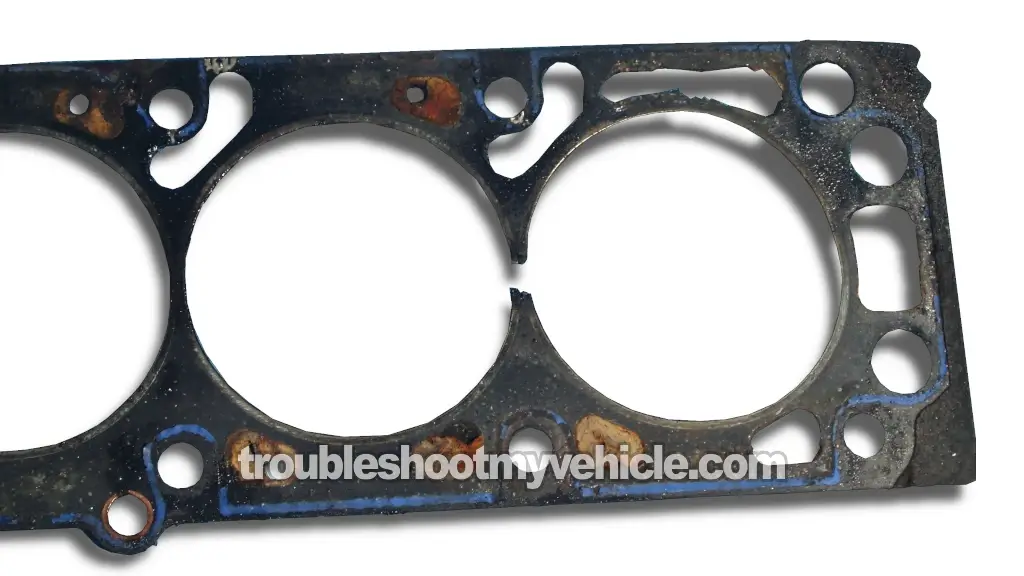
Checking whether your 4.0L Ford Explorer (Aerostar, Mountaineer) has a blown head gasket can be done with one of four different tests and in this article, I'll show you how to do them and how to interpret the results you'll obtain from them.
NOTE: You can find the 4.0L Ford Ranger (Mazda B4000) blown head gasket tests here:
- How To Test For A Blown Head Gasket (1991-2011 4.0L Ford Ranger And Mazda B4000) (at: easyautodiagnostics.com).
Contents of this tutorial:
- Important Tips.
- Symptoms Of A Blown Head Gasket.
- TEST 1: Oil The Color Of Coffee With Too Much Creamer.
- TEST 2: Combustion Gases Shooting Out Of The Radiator.
- TEST 3: Cylinder Compression Test.
- TEST 4: Using A Chemical Block Tester (Combustion Leak Tester).
- More Ford 4.0L Ford Explorer And Aerostar Tutorials.
ES  You can find this tutorial in Spanish here: Cómo Probar El Empaque De La Cabeza (Ford 4.0L) (at: autotecnico-online.com).
APPLIES TO: This tutorial applies to the following vehicles:
- 4.0L V6 Ford Aerostar: 1991, 1992, 1993, 1994, 1995, 1996, 1997.
- 4.0L V6 Ford Explorer: 1991, 1992, 1993, 1994, 1995, 1996, 1997, 1998, 1999, 2000, 2001, 2002, 2003, 2004, 2005, 2006, 2007, 2008, 2009, 2010.
- 4.0L V6 Mercury Mountaineer: 1997, 1998, 1999, 2000, 2001, 2002, 2003, 2004, 2005, 2006, 2007, 2008, 2009, 2010.
ENGINE NO-START DIAGNOSTICS: If you're troubleshooting an engine no-start and a blown head gasket isn't the culprit, this guide will help you track down the real cause:
Important Tips
To successfully accomplish the tests in this article, I suggest you follow these tips:
TIP 1: Read the entire article first. The first two tests can be done in under 10 minutes, if you know what you're looking and testing for.
TIP 2: You'll need an engine compression tester for TEST 3.
TIP 3: You'll be working around a cranking engine as you perform TEST 2 and TEST 3, so be careful and take all necessary safety precautions.
Symptoms Of A Blown Head Gasket
A head gasket failure will usually cause one of two issues:
- An engine no-start problem.
- The engine starts and runs, but overheats for no apparent reason.
If the engine starts and runs but has suffered a head gasket failure, you'll see one or more of the following symptoms:
- Your 4.0L Ford Explorer (Aerostar, Mountaineer) is overheating. You know it's not the fan (or fan clutch) or thermostat.
- White smoke is coming out of the tail-pipe and it smells like anti-freeze being cooked.
- Your 4.0L Ford Explorer (Aerostar, Mountaineer) won't start.
- You have already verified it's not an ignition system problem because you have spark coming out at all of the spark plug wires.
- You know it's not a lack of fuel, because you have verified that the fuel pump is delivering fuel to the fuel injectors.
- The engine oil is thick and tan to off-white color (mixed with coolant).
In case you're wondering, the most common cause of a blown head gasket is that the engine overheated because:
- The fan clutch or fan motor is not working.
- All of the coolant leaked out of the engine and you kept driving it this way.
- The thermostat went bad and is stuck closed and the coolant could not circulate.
TEST 1: Oil The Color Of Coffee With Too Much Creamer
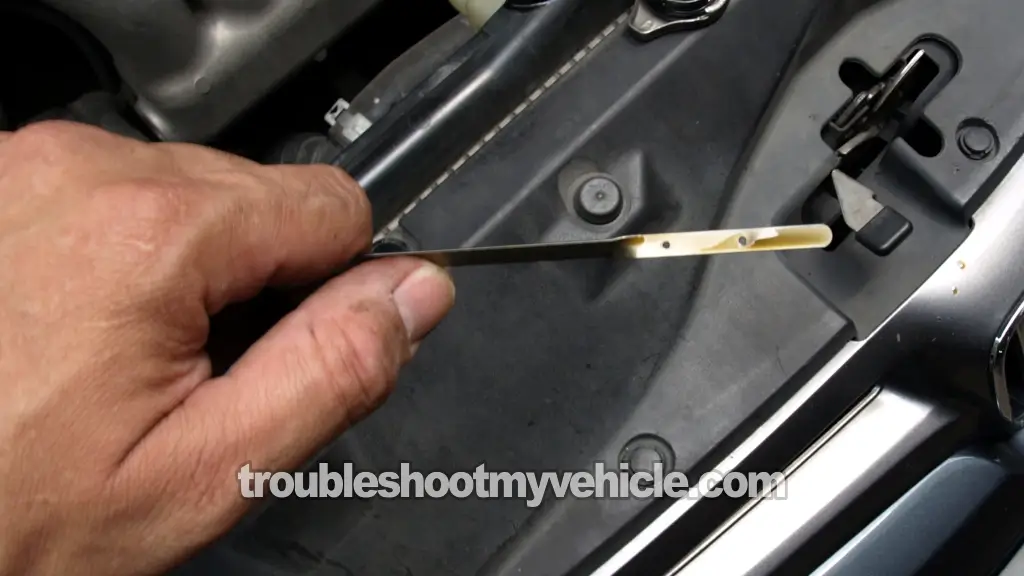
One of the tell tale signs of a blown head gasket is coolant mixing with the engine oil. The end result of this failure is engine oil looking like coffee with too much creamer.
Your first test will be to confirm whether this has happened or not by checking the condition of the engine oil sticking to the engine oil dipstick.
This is the test:
- 1
Open the hood.
- 2
Pull out the engine's oil dipstick.
- 3
Check the color of the oil sticking to the engine oil dipstick.
- 4
You'll see one of two results:
1.) The engine oil will be a creamy tan/off white color and as thick as syrup.
2.) The engine oil is a normal color and viscosity.
This is what the color of the engine oil means:
CASE 1: The color of the oil is a tan/off white color. This is bad news and indicates that your 4.0L Explorer (Aerostar, Mountaineer) overheating to the point the one (or both) of the head gaskets burned.
CASE 2: The color of the engine oil is normal. So far so good, but this result doesn't really confirm that the head gaskets are OK.
The next test is to see if the engine's compression/combustion gases are escaping thru' the radiator. Go to: TEST 2: Combustion Gases Shooting Out Of The Radiator.
TEST 2: Combustion Gases Shooting Out Of The Radiator
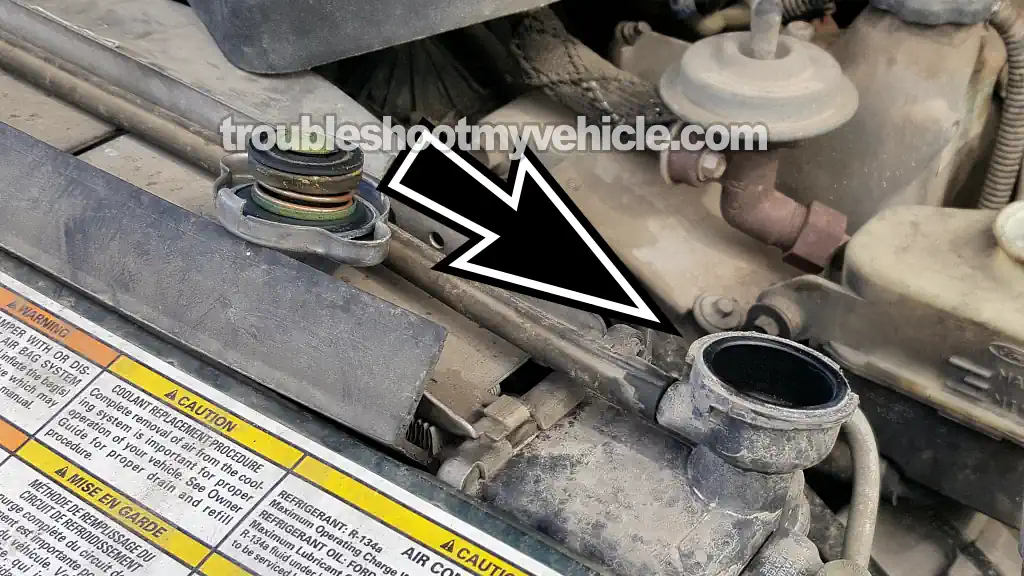
The second most common test, to see if the head gasket on your 4.0L Ford Explorer (Aerostar, Mountaineer) is blown or not, is to check if engine compression and/or combustion gases are escaping thru' the cooling system. This is another very easy test and does not require any tools whatsoever to do.
Now, before you start, if the engine has been running for an extended amount of time and it's hot, let the engine cool down for at least 1 hour. This is important, or you run the risk of getting scalded with hot coolant.
If your 4.0L Ford Explorer (Aerostar, Mountaineer) doesn't start, well this is not an issue. OK, here are the test steps:
- 1
Remove the radiator's cap.
- 2
Check the radiator's coolant level. If empty, add some water or coolant to bring the coolant level to full.
- 3
Have your helper to crank the engine while you observe the radiator's neck from a safe distance.
- 4
You'll see one of two results:
1.) The water or coolant inside the radiator will shoot up and out of the now open radiator.
2.) The coolant will not be disturbed. In other words, cranking the engine will have no effect on the level of the water or coolant in the radiator.
OK, now that the testing part is done, let's take a look at what your results mean:
CASE 1: The coolant bubbled out or shot out from the radiator. This is bad news and this let's you know beyond a shadow of a doubt that the head gasket on your 4.0L Ford Explorer (Aerostar, Mountaineer) is blown. No further testing is required.
CASE 2: The coolant DID NOT bubble out NOR shoot out from the radiator. So far so good.
If the engine starts, but runs with a cylinder misfire, your next step is: TEST 3: Cylinder Compression Test.
If the engine starts (no misfire) and overheats within minutes (for no apparent reason), your next test is: TEST 4: Using A Chemical Block Tester (Combustion Leak Tester).
TEST 3: Cylinder Compression Test
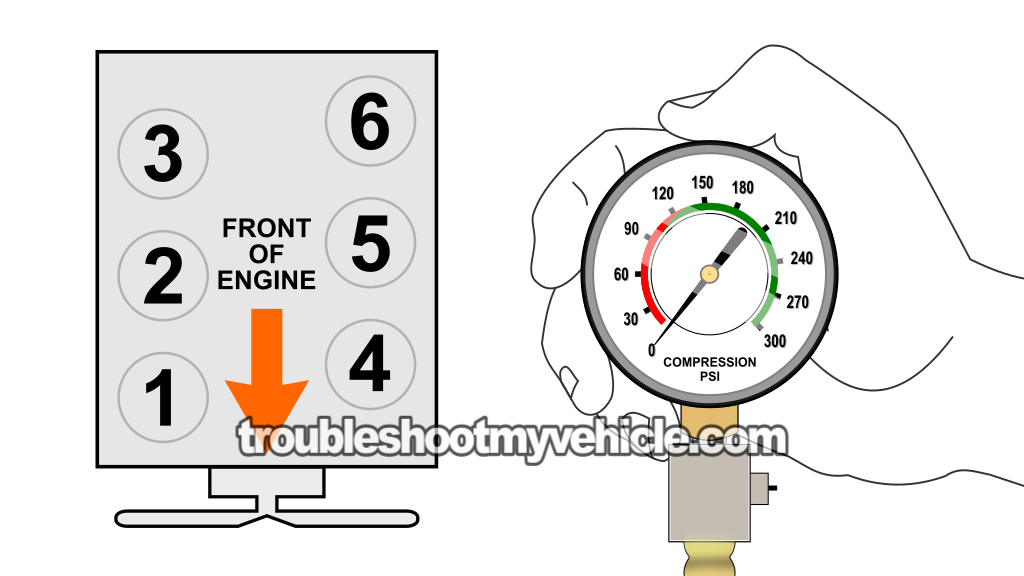
One of the most overlooked tests, to see if the head gasket is bad or not, is an engine compression test.
Why? Well because most folks will do the two previous tests (TEST 1 and TEST 2) and they will not see the engine oil mixing with the coolant nor see the combustion gases jumping out of the open radiator and conclude everything is OK. And whatever information they have available never mentions testing the engine compression.
In this test step, you'll be doing a compression test and more importantly, you'll be able to easily interpret those results (with my help) to further confirm or exonerate a blown head gasket.
This test will see if the head gasket on your 4.0L Ford Explorer (Aerostar, Mountaineer) has burned at a point between side-by-side cylinders.
If this does happen, the compression/combustion of one cylinder to leak into the other and vice-versa and the compression readings will easily let us know this has happened.
OK, here's what you need to do:
- 1
Disable the ignition system on your 4.0L Ford Explorer (Aerostar, Mountaineer). It's important that spark is not created and delivered to the spark plug wires.
You can easily accomplish this 'disabling' by disconnecting the ignition module's electrical connector or the ignition coil's electrical connector (if your vehicle has a distributor) or the ignition coil pack's electrical connector. - 2
Disable the fuel system. It's important that fuel not be injected into the engine.
You can do this by removing the fuel pump relay or the fuel pump fuse. - 3
Disconnect all spark plug wires from their spark plugs.
NOTE: Before you remove the spark plug wires, label them so that you'll be able to easily reconnect them to their proper original locations. - 4
Remove all of the spark plugs.
- 5
Thread in the compression tester by hand, on the first spark plug hole you're gonna' start with.
Do not use any tools to tighten the compression tester. Hand tightening the compression tester is more than enough to get the proper results. - 6
Have a helper crank the engine. Your job is to observe the compression tester.
- 7
Have your assistant stop cranking the engine when the tester's needle stops climbing.
- 8
Write down the reading and what cylinder it belongs to (you can use the illustration above to help you identify the cylinder) on a piece of paper.
- 9
Remove the compression tester and repeat the above steps in the remaining cylinders.
OK, let's take a look at what your results mean:
CASE 1: All cylinder compression readings where normal. These compression gauge readings confirm that the head gasket is OK and not burned at a point between two cylinders.
OK, so far your test results have confirmed that the head gasket on your 4.0L Ford Explorer (Aerostar, Mountaineer) is not blown. But, if your Ford is still overheating without reason and you still suspect a blown head gasket, go to: TEST 4: Using A Chemical Block Tester (Combustion Leak Tester).
CASE 2: Two side by side cylinders had 0 PSI compression. This engine compression reading confirms that the head gasket is burned thru' at the point between those two cylinders. You'll need to replace both head gaskets.
TEST 4: Using A Chemical Block Tester (Combustion Leak Tester)
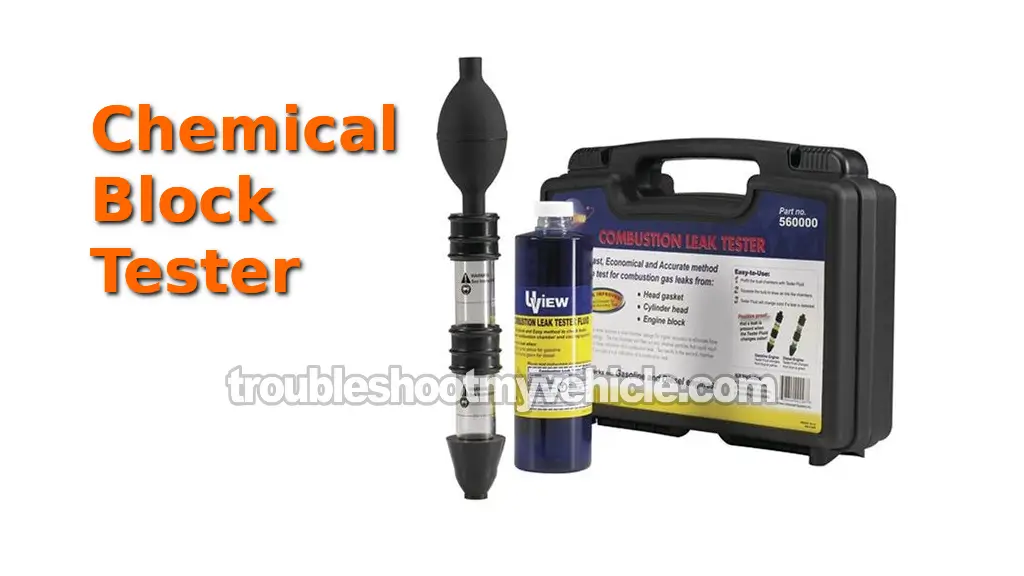
Using a block tester, to check for a blown head gasket when the previous 3 tests don't confirm it, will tell you without a shadow of doubt if it's blown or not.
Why didn't I start of with this test? Because TEST 1, TEST 2, and TEST 3 usually pinpoint a blown head gasket condition in about 95% of the cases (not to mention you don't have to spend any $ to do them). It's the remaining hard to diagnose 5% percent where the effort of finding a block tester is worth it.
In a nutshell, this is how a block tester works:
- A blue liquid chemical, which is blue in color, is placed in the tester (see photo above).
- The tester assembly is then placed on the open radiator neck (you may have to drain some of the coolant in the radiator since this tool needs to 'gulp' some of the air inside the radiator).
- The rubber bellow is then squeezed to suck in the air up through the two fluid-filled chambers. As the air bubbles up through the fluid, it will cause a chemical reaction.
- If the blue chemical turns yellow (for gasoline engines), combustion gases are entering the radiator. This result confirms a head gasket failure, a cracked block, or a cracked cylinder head issue.
- If the blue chemical doesn't change color, you can conclude that you don't have a head gasket failure, a cracked block, or a cracked cylinder head issue.
Where can you get the chemical and block tester? At your local auto parts store or here:


Disclosure: As an Amazon Associate, I earn from qualifying purchases. If my tutorials help you, using these links is an easy way to support the site at no extra cost to you. Thank you!
More Ford 4.0L Ford Explorer And Aerostar Tutorials
There are several more 4.0L V6 Ford Explorer (Aerostar, Mountaineer) specific 'how to' tutorials that I've written for your troubleshooting and diagnostic benefit. You can find them in this index:
Here's a sample of the test articles you'll find in the index:
- How To Test The Alternator (1991-2000 4.0L V6 Ford Explorer And Aerostar).
- How To Test The Fuel Injectors (1991-1996 4.0L V6 Ford Explorer And Aerostar).
- How To Test The Thermostat (1995-2003 4.0L V6 Ford Explorer And Mercury Mountaineer).
- How To Test The Coil Pack (at: easyautodiagnostics.com).

If this info saved the day, buy me a beer!