
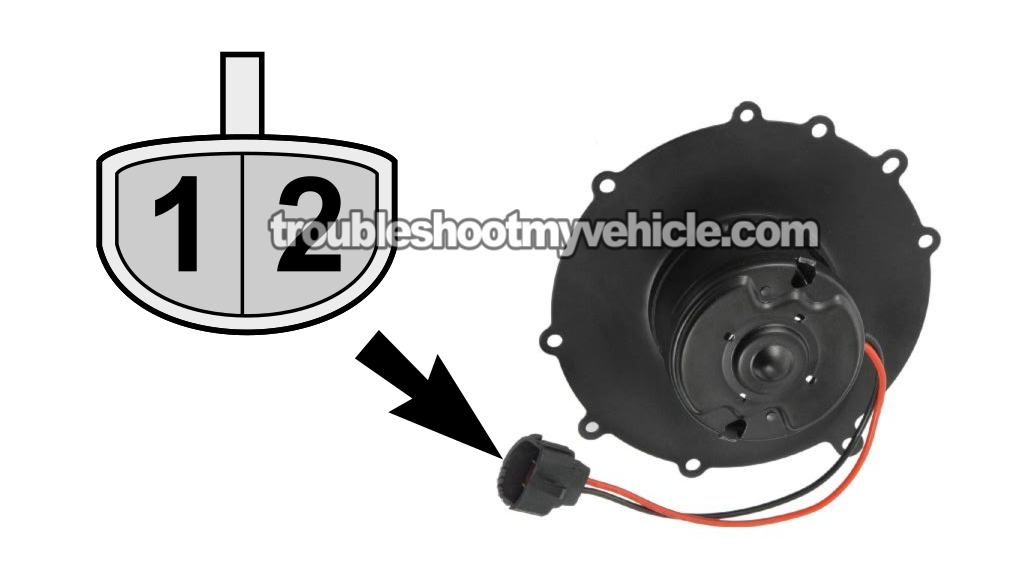
Your Ford Explorer's (Aerostar, Ranger, B4000, Mountaineer, Mountaineer) blower motor is a simple 2-wire component that can be easily tested by manually applying battery power and Ground to it.
If your 4.0L Ford Explorer (Aerostar, Ranger, B4000, Mountaineer, Mountaineer) is currently experiencing a ‘no blower’ problem, then there's a good chance that the blower motor has fried and needs to be replaced.
In this tutorial, I'll show you how to test it and find out for sure.
Contents of this tutorial:
ES  You can find this tutorial in Spanish here: Verificando el Motor del Soplador del Aire Acondicionado (4.0L Ford) (at: autotecnico-online.com).
APPLIES TO: This tutorial applies to the following vehicles:
- 4.0L V6 Ford Aerostar: 1995, 1996, 1997.
- 4.0L V6 Ford Explorer: 1995, 1996, 1997, 1998, 1999, 2000, 2001.
BLOWER MOTOR SYSTEM DIAGNOSTIC TESTS:
- How To Test The Blower Motor Switch (1995-2001 4.0L V6 Ford Explorer And Mercury Mountaineer).
- How To Test The Blower Motor Resistor (1995-2001 4.0L V6 Ford Explorer And Mercury Mountaineer).
TEST 1: Checking The Amperage Draw Of The Blower Motor
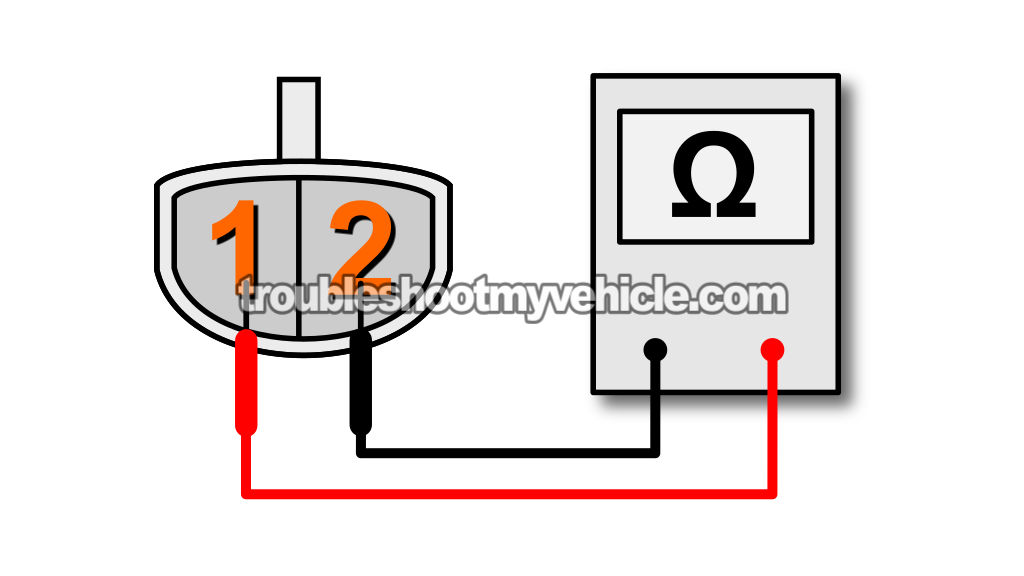
The first thing we're going to do is check the blower motor's amperage draw. In other words, we're going to check how much current it's using. The blower motor may run, but if it's drawing too much current, it will eventually burn up the blower motor resistor or blow its fuse.
This is a pretty simple test. We're going to do it by measuring the blower motor's internal resistance and then using Ohm's law to calculate, based on that resistance value, how much amperage the blower motor is using.
If our calculations show that the blower motor is using 40 amps or more, then the blower motor is bad and needs to be replaced. This is true even if, in TEST 2, when we apply power and ground to it, the motor runs.
Alright, let's get going:
- 1
Disconnect the blower motor from its two-wire connector.
- 2
Set your multimeter to Ohms (Ω) mode.
- 3
Check the resistance of the blower motor across the two male terminals of its 2-wire connector
NOTE: This is the connector coming out of the blower motor, not the one belonging to your vehicle's wiring harness. - 4
Write down the resistance value your multimeter shows.
The resistance value may fluctuate a bit, but it will stabilize after a few seconds. - 5
Calculate current draw using Ohm's Law.
Divide 12.5 by the resistance value. Example: 0.4Ω gives 31.25A (12.5 ÷ 0.4 = 31.25). - 6
The blower motor's amperage draw must not exceed 40 amps.
Let's examine your test result:
CASE 1: The amperage draw is way under 40 Amps. This is a correct and expected test result and lets you know that the blower motor isn't drawing excessive amounts of current.
Your next step is to go to: TEST 2: Applying Power And Ground To The Blower Motor.
CASE 2: The amperage draw is at or above 40 Amps. This lets you know that the blower motor is fried since it's using an excessive amount of current.
Even if the blower motor runs when you apply power and ground in TEST 2, the blower motor will either burn out its blower motor resistor or blow its fuse. Replace the blower motor to solve the issue.
TEST 2: Applying Power And Ground To The Blower Motor
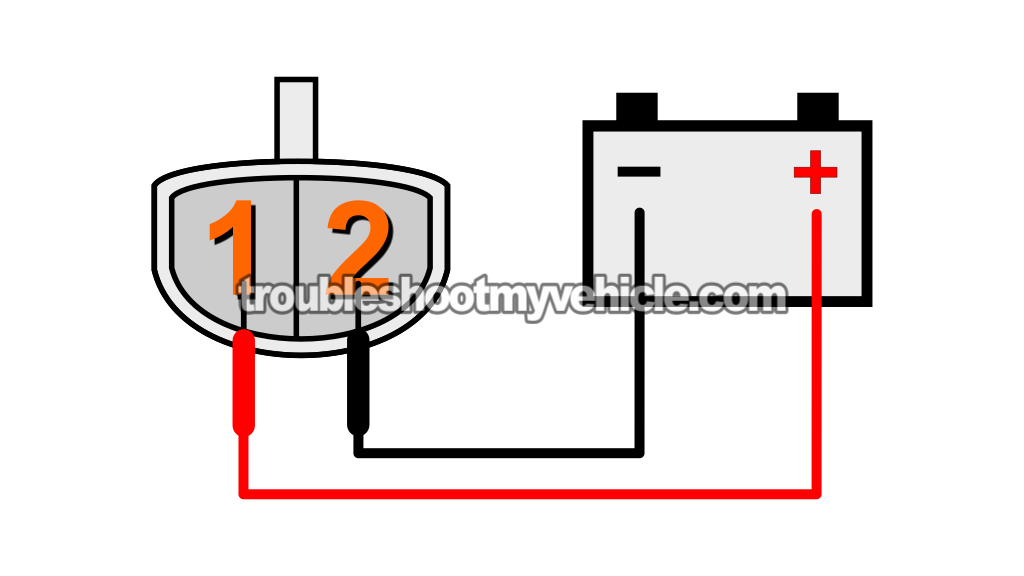
The blower motor gets power and Ground from the 2 wires that connect to it.
The connector on your Ford's blower motor will have a BRN/ORG wire and a PNK/WHT wire.
What we'll do, to check to see if the blower motor is fried is to unplug the blower motor from its connector and manually apply battery power and Ground with jumper wires or a power probe.
By the way, the original blower motor on your 4.0L Ford Explorer (Aerostar, Ranger, B4000, Mountaineer) may not look exactly like the one in the image viewer. Don't worry, since the only difference will be that one has the plug (where the harness connector connects to) right on the body of the motor and the other has the plug on two extended wires.
NOTE: If you use a jumper wire, make your own fused jumper wire to apply battery power to the blower motor (as a safety precaution against shorting the jumper wire to Ground). You can make your own fused jumper wire by using an inline fuse holder that you can buy at your local auto parts store and insert a 30 amp fuse into it.
Alright, these are the test steps:
- 1
Disconnect the blower motor from its two-wire electrical harness connector.
- 2
Connect one end of the fused jumper wire to the blower motor male spade terminal labeled with the number 1 (in the illustration).
Connect the other end of the fused jumper wire to your Ford's car battery positive (+) terminal. - 3
Connect one end of a jumper wire to the blower motor male spade terminal labeled with the number 2.
Connect the other end of the jumper wire to your Ford's battery negative (-) terminal.
The blower motor should run as you soon as you connect the other end of this jumper wire to your vehicle's car battery negative (-) terminal.
Let's take a look at what your test results mean:
CASE 1: The blower motor ran when you applied battery power and Ground. This tells you that the blower motor is good and not the cause of the ‘no blower’ problem your Ford Explorer (Aerostar, Ranger, B4000, Mountaineer) is experiencing.
There's a good chance that what's causing the ‘no blower’ problem on your Ford is a bad blower resistor or a bad blower switch. Altho' it's beyond the scope of this tutorial to diagnose these components, you have at least eliminated the blower motor as bad.
NOTE: If the blower motor runs but you hear a metal-to-metal grinding noise coming from its bearings, the blower motor is bad and needs to be replaced. Even though it runs, that grinding noise means the bearings are worn out and the motor will eventually fail.
CASE 2: The blower motor DID NOT run when you applied battery power and Ground with the jumper wires. This test result tells you that the blower motor is bad and needs to be replaced.
The next subheading will show you where you can buy the blower motor and save a few bucks.
Where To Buy The Blower Motor And Save
You can find the blower motor in any auto parts store. If you're wanting the buy the original Ford Motorcraft blower motor, you can buy it online for a whole lot cheaper than somewhere local.
The following links will help you comparison shop for the Ford Motorcraft and after-market blower motors:


Will the above blower motor fit your particular Ford Explorer (Aerostar, Ranger, B4000, Mountaineer)? Don't worry, once you get to the site they'll make sure it fits (by asking you the specifics of your particular Ford vehicle). If it doesn't fit, they'll find you the right one.
Disclosure: As an Amazon Associate, I earn from qualifying purchases. If my tutorials help you, using these links is an easy way to support the site at no extra cost to you. Thank you!
More Diagnostic Test Tutorials
You can find a complete list of 4.0L Ford Explorer, Aerostar, and Mercury Mountaineer troubleshooting tutorials here:
Here's a sample of the tutorials you'll find in the index:
- How To Test The Fuel Pump (1993-2000 4.0L V6 Ford Explorer, Aerostar, And Mercury Mountaineer).
- How To Test Engine Compression (1991-2010 4.0L V6 Ford Explorer, Aerostar, And Mercury Mountaineer).
- How To Troubleshoot A No-Start Problem (1991-2010 4.0L V6 Ford Explorer, Aerostar, And Mercury Mountaineer).
- How To Test The Fuel Injectors (1991-1996 4.0L Ford Explorer And Aerostar).
- How To Test The Ford EGR Valve EGR Vacuum Solenoid, DPFE Sensor (at: easyautodiagnostics.com).
- How To Test The Coil Pack (Ford 3.0L, 3.8L, 4.0L, 4.2L) (at: easyautodiagnostics.com).

If this info saved the day, buy me a beer!


