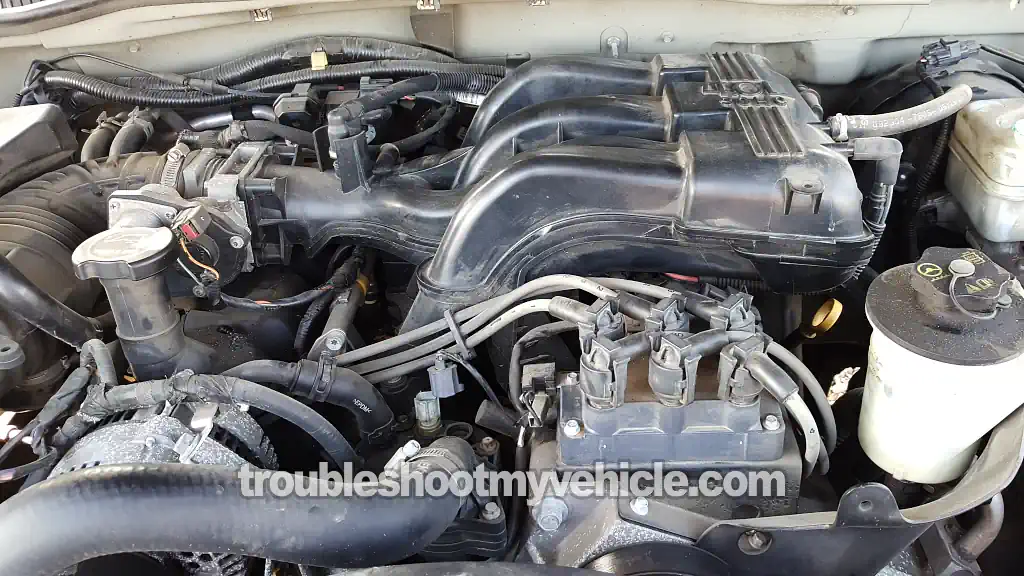
Testing a cranks but does not start condition on your 4.0L V6 Ford Explorer (Aerostar, Mercury Mountaineer) doesn't have to be complicated.
In this tutorial, I'll go into the basics of a no-start condition and show you some of the step-by-step tutorials that'll help you get to the bottom of the problem.
NOTE: You can find the 4.0L Ford Ranger and Mazda B4000 no-start tutorial here:
- How To Diagnose A No-Start Problem (4.0L Ford Ranger And Mazda B4000) (at: easyautodiagnostics.com).
Contents of this tutorial:
- Difference Between A No-Crank And A No-Start Condition.
- No-Start Condition Basics.
- STEP 1: Checking For Spark.
- STEP 2: Checking For Fuel.
- STEP 3: Checking For A Blown Head Gasket.
- STEP 4: Checking Engine Mechanical Condition.
- No Start Summary.
- More 4.0L Ford Explorer, Aerostar, And Mercury Mountaineer Tutorials.
ES  You can find this tutorial in Spanish here: Cómo Probar Un Arranca Pero No Prende (4.0L Ford) (at: autotecnico-online.com).
Difference Between A No-Crank And A No-Start Condition
There's a big difference between a no-crank and a no-start condition. Here's a brief description of both conditions:
No-Start Condition: The engine cranks (turns over) like it wants to start, but it never does. The usual culprits are:
- A bad crank position sensor.
- A bad fuel pump.
No-Crank Condition: The engine does not turn over when you turn the key to start your Ford vehicle. This is usually due to:
- A bad starter motor.
- A bad neutral safety switch.
- A bad ignition switch.
- The engine is locked up.
This tutorial is geared toward a cranks but does not start condition. So if you've got a no-crank problem, start with testing the starter motor.
The following tutorial will help you test the starter motor:
No-Start Condition Basics
To successfully troubleshoot the cause of the no-start condition of your Ford 4.0L Explorer (Aerostar, Mercury Mountaineer), you need to know that there are three fundamental components the engine needs to start, and they are:
- Air.
- Fuel.
- Spark.
So, when your Ford 4.0L Explorer (Aerostar or Mercury Mountaineer) cranks but does not start, it's because one of these components is missing from the mix.
This simple but essential information lets you know that the engine no-start problem will lie in the fuel system, ignition, or the engine.
Here are some more specifics:
1.) Ignition System
- The ignition system is the one responsible for creating and delivering spark. Without spark, the engine will crank but not start.
- The ignition system of the Ford 4.0L equipped vehicles covered by this article use a distributor-less ignition system. More specifically, it uses a coil pack type ignition system.
- In my experience, the most common component failures of the ignition system that causes a no-start no-spark condition are:
- The ignition coil pack is not receiving power.
- A bad crankshaft position sensor.
- You can systematically test the ignition system components to precisely determine what has failed (if indeed something has).
2.) Fuel System
- The fuel system is the one responsible for supplying the engine with fuel.
- The fuel system component that causes the majority of no-start no-fuel problems:
- A bad fuel pump relay.
- A bad fuel pump.
- The fuel pump inertia switch (tripped and cutting power to the fuel pump).
- You can easily test the fuel pump (along with the other two components) to make sure it has fried.
3.) Engine (Mechanical System)
- The engine pistons and cylinder head valves (and all the other related components like timing chains, etc.) are responsible for the induction of the fresh air the engine needs for the combustion process.
- Although rare, internal engine mechanical problems can and do cause no-start conditions.
- Possible internal engine problems are:
- A blown head gasket.
- A blown engine.
- A broken timing chain (although this is very rare).
OK, the list of possible things that can go wrong looks pretty long, but it is rare to see (or have) two different components go bad from two separate systems simultaneously.
The cool thing is that there is a diagnostic strategy that you can use to figure out precisely what's wrong with your particular no-start problem. Let's find out more about it in the following sections.
STEP 1: Checking For Spark
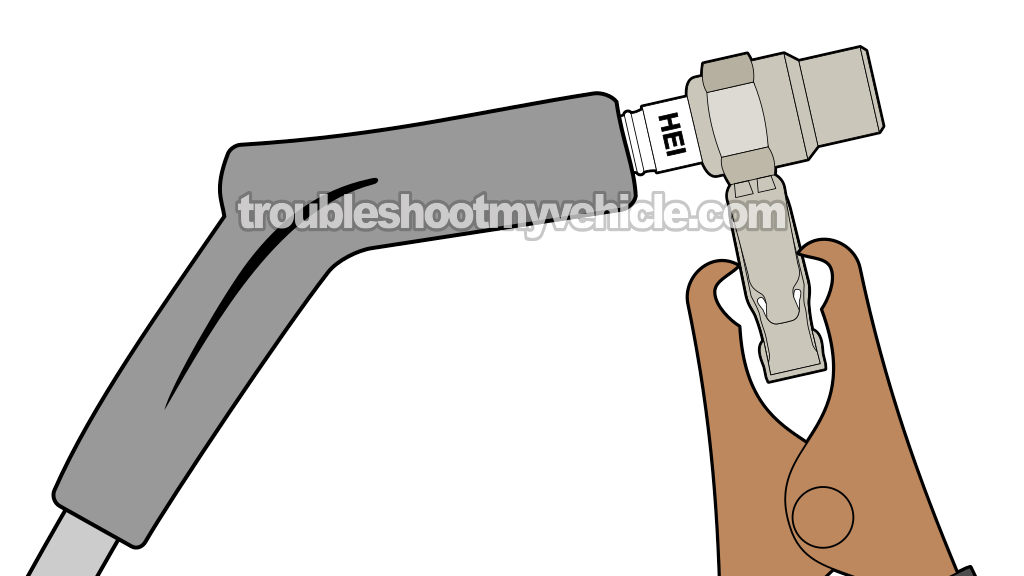
Testing the ignition system is usually the easiest of all the tests done to find the cause of the cranks but does not start condition.
Usually, most of the 'cranks but does not start' conditions I've troubleshot and repaired over the years had their root cause in the ignition system.
So, my recommendation is to check for spark at all of the spark plug wires with a spark tester.
Testing the ignition system on your Ford 4.0L Explorer (Aerostar or Mercury Mountaineer) isn't difficult. I've written a tutorial that'll show you in a step-by-step manner, and you can find it here:
- How To Test The Coil Pack (Ford 3.0L, 3.8L, 4.0L, 4.2L) (at: easyautodiagnostics.com).
The ignition system is NOT causing the no-start problem if:
- Spark is present at all 6 spark plug wires.
With all 6 spark plug wires delivering spark to the cylinders (spark plugs), you can conclude that the ignition system is NOT causing the engine no-start problem.
You can also conclude that:
- The crankshaft position (CKP) sensor is good.
- The ignition control module (ICM) is good (if equipped).
- The ignition coil pack is good.
Since the ignition system is creating and feeding spark to the engine cylinders, the next test steps are to test the fuel pump's pressure. Go to: STEP 2: Checking For Fuel.
The ignition system IS THE CAUSE of the no-start problem if:
- You got NO spark at all 6 spark plug wires.
The components that can cause this no-spark problem are:
- A bad crankshaft position (CKP) sensor.
- A bad ignition control module (ICM) -if equipped.
- In some rare cases, a bad ignition coil pack.
Your next steps are to:
- Test the crankshaft position (CKP) sensor.
- Test the ignition control module (ICM) -if equipped.
STEP 2: Checking For Fuel
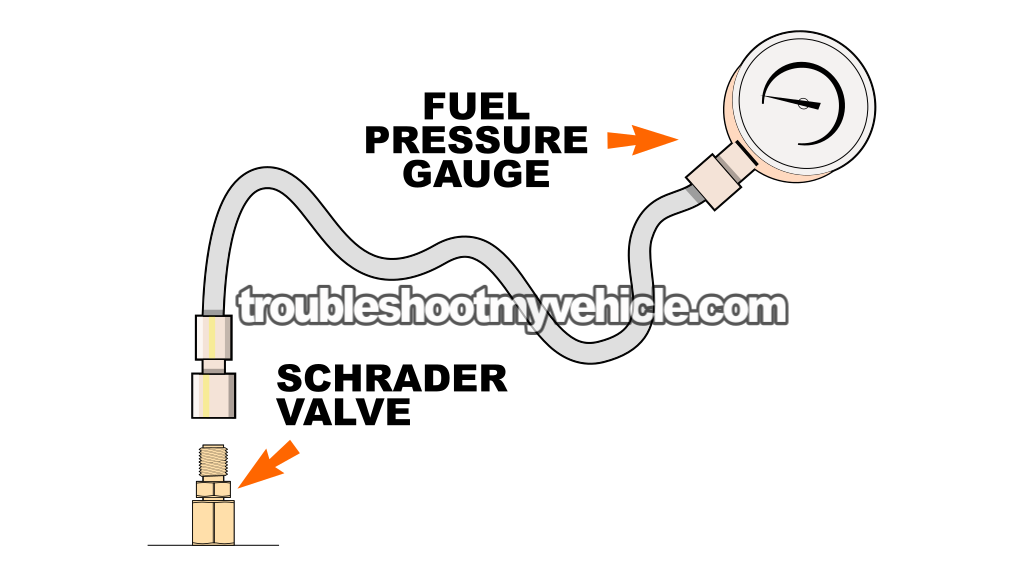
Fuel pumps fail all of the time, and if the fuel pump has failed in your 4.0L Ford Explorer (Aerostar or Mountaineer), you'll have a bonafide 'cranks but does not start' condition on your hands.
But, before testing the fuel pump, you should make sure that the fuel pump inertia switch hasn't shut down the fuel pump. Checking the fuel pump inertia switch simply involves pressing down on its re-set button to see if it clicks.
- Fuel Pump Inertia Switch Tests (1991-2010 4.0L V6 Ford Explorer, Aerostar, And Mercury Mountaineer).
If the fuel pump inertia switch clicks, as you're pressing down on its re-set button, then the fuel pump should start working again, and the engine should start.
Suppose the fuel pump inertia switch is OK. In that case, the next step is checking to see if the fuel pump is producing the correct fuel pressure. The absolute best way to do it is with a fuel pressure gauge.
You can find the fuel pump pressure test explained here:
- How To Test The Fuel Pump (1993-2000 4.0L V6 Ford Explorer, Aerostar, And Mercury Mountaineer) .
- How To Test The Fuel Pump (2001-2003 4.0L V6 Ford Explorer And Mercury Mountaineer).
- How To Test The Fuel Pump (2004-2010 4.0L V6 Ford Explorer And Mercury Mountaineer).
On the 2004-2010 Explorer/Mountaineer, the fuel pump driver module (FPDM) is a common cause of an engine no-start due to a lack of fuel. In this tutorial, I'll show you how to test it:
The fuel system is NOT causing the no-start problem if:
- Fuel pressure is within specification.
If the fuel pressure gauge registers the indicated fuel pressure specification, then you can confidently conclude that the fuel pump is working and delivering enough fuel to the fuel injectors.
You can also conclude that the fuel pump is not behind the engine's no-start problem.
The next step is to check for a blown head gasket. Go to: STEP 3: Checking For A Blown Head Gasket.
The fuel system IS THE CAUSE of the no-start problem if:
- Fuel pressure is 0 PSI (or anything below the fuel pressure specification).
This confirms that the no-start problem is caused by a lack of fuel. This usually means that the fuel pump is bad and needs to be replaced.
STEP 3: Checking For A Blown Head Gasket
A head gasket failure is usually the result of an engine overheating issue.
The 4.0L V6 engine in your Ford Explorer (Aerostar or Mercury Mountaineer) comes equipped with two cylinder head gaskets.
There are 4 specific tests to check for a blown head gasket, and you can find them explained in this tutorial:
A blown head gasket is NOT causing the no-start problem if:
- The engine oil has a normal color (in other words, it doesn't have a milky-white color).
- The coolant in the radiator remains undisturbed when cranking the engine (with the radiator open).
- The engine passed a block test.
Your next test is to check the engine's compression. Go to: STEP 4: Checking Engine Mechanical Condition.
A blown head gasket IS THE CAUSE of the no-start problem if:
- The engine oil has a milky-white color (like coffee with too much creamer).
- - or -
- The coolant in the radiator shot out when cranking the engine (with the radiator open).
- - or -
- The engine failed a block test.
STEP 4: Checking Engine Mechanical Condition
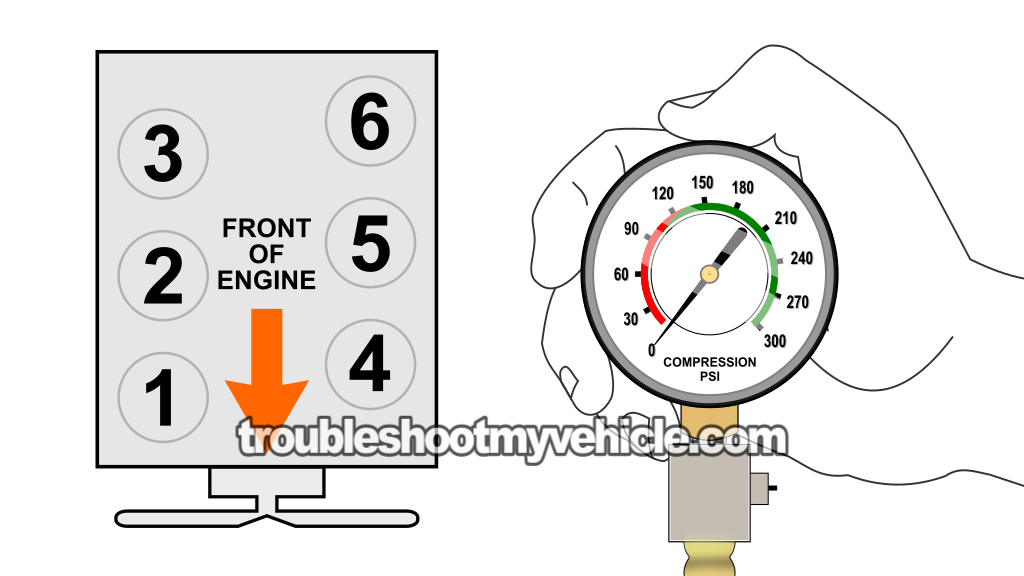
The engine in your vehicle could have an internal mechanical problem and be the source of the 'cranks but does not start' condition.
The way to find out if the engine is the cause of the no-start is to do a compression test.
When performing an engine compression test, what you're looking for is an average compression reading of NO LESS THAN 90 PSI across all or the majority of the engine cylinders.
I've written an engine compression test tutorial that you may find useful. You can find it here:
- How To Test Engine Compression (1991-2010 4.0L V6 Ford Explorer, Aerostar, And Mercury Mountaineer).
An engine compression problem is NOT causing the no-start problem if:
- The compression of each cylinder is above 120 PSI.
An engine compression problem IS THE CAUSE of the no-start problem if:
- 2 or more cylinders have 0 PSI compression.
- - or -
- All cylinders have 0 PSI compression.
No Start Summary
When troubleshooting a 'cranks but does not start' condition, the key to saving yourself time, money, and a lot of frustration is to check the basics first. The basics are spark, fuel, and air (engine cylinder compression).
To check the basics, you need tools. There's just no way around it. One of the analogies that I've always enjoyed repeating about doing a job without the right tools is like trying to eat a bowl of soup with a fork.
So besides knowing what to test, you need tools to do those tests. You don't have to spend an arm and a leg since you can buy a lot of these diagnostics tools inexpensively online.
Here are some of the essential tools you'll need:
- A fuel pressure gauge.
- A spark tester.
- A compression gauge.
- A multimeter.
More 4.0L Ford Explorer, Aerostar, And Mercury Mountaineer Tutorials
You can find more 4.0L V6 Ford Explorer diagnostic tutorials here:
Here's a sample of the tutorials you'll find in the index:
- How To Test The TPS (1997-2001 4.0L V6 SOHC Ford Explorer).
- How To Test The Thermostat (1995-2003 4.0L V6 Ford Explorer And Mercury Mountaineer).
- How To Test The Starter Motor (1991-2010 4.0L V6 Ford Explorer, Aerostar, And Mercury Mountaineer).
- FPDM Basic Operating Theory (2004-2010 4.0L V6 Ford Explorer And Mountaineer).

If this info saved the day, buy me a beer!