
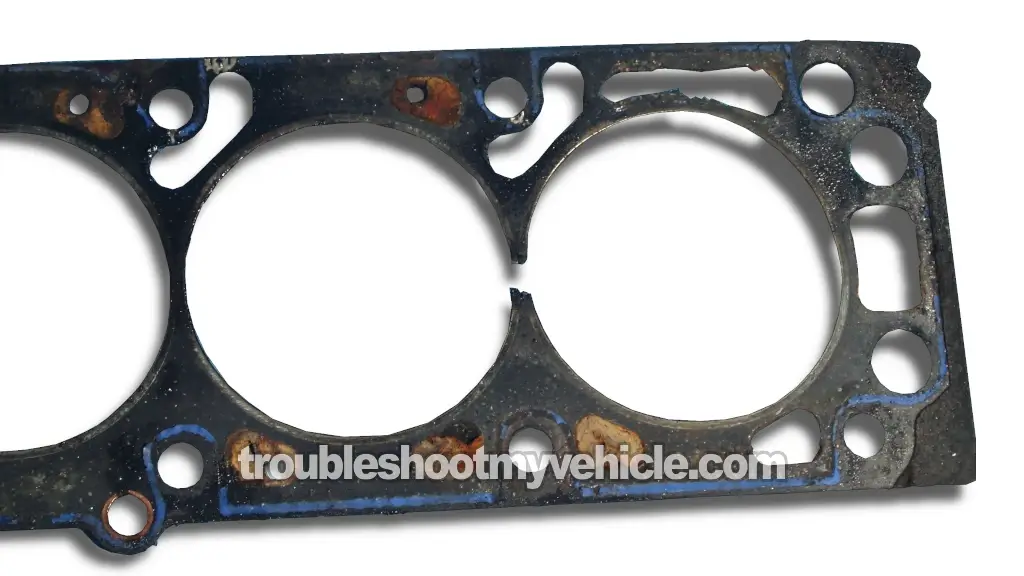
Testing for a blown head gasket on the 3.8L V6 engine in your Buick LeSabre is pretty straightforward. In this tutorial, I'll show you four different tests you can perform to find out if one or both head gaskets have failed.
The cool thing is that two of these tests take less than five minutes and don't require any tools. The other two involve performing an engine compression test and using a combustion leak tester to check for exhaust gases in the cooling system.
I'll explain each test in a step-by-step manner, so you can quickly and easily determine if a blown head gasket is behind the overheating, coolant loss, misfire, or no-start problem on your 1994-2005 3.8L V6 Buick LeSabre.
Contents of this tutorial:
APPLIES TO: This tutorial applies to the following vehicles:
- 3.8L V6 Buick LeSabre: 1994, 1995, 1996, 1997, 1998, 1999, 2000, 2001, 2002, 2003, 2004, 2005.
Symptoms Of A Blown Head Gasket
In my experience, most blown head gasket problems on the 3.8L V6 engine usually show up in one of two ways:
- The engine cranks but doesn't start.
- The engine starts and runs, but begins overheating within a few minutes.
Depending on how the head gasket has failed, your 1994-2005 3.8L V6 Buick LeSabre may exhibit one or more of the following symptoms:
- Engine overheating: The engine overheats even though the rest of the cooling system (radiator, thermostat, water pump, cooling fans, etc.) appears to be working correctly.
- White exhaust smoke: Thick white smoke with a sweet coolant smell comes out of the tailpipe.
- Engine no-start: The engine cranks normally but won't start.
- Milky-white engine oil: The engine oil has a milky light-brown or whitish color because coolant has mixed with the oil.
TEST 1: Engine Oil The Color Of Coffee With Too Much Creamer
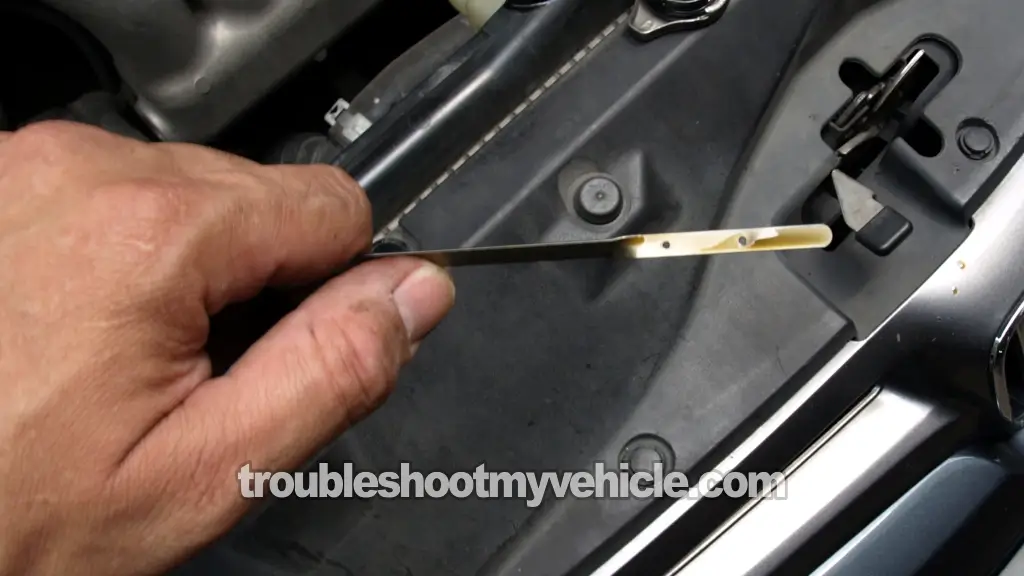
One of the telltale signs of a blown head gasket is coolant leaking into the crankcase and mixing with the engine oil.
When this happens, the oil loses its normal appearance and turns a milky, creamy color. The easiest way I can describe it is that it looks like coffee with way too much creamer.
Our first test is a simple visual inspection of the engine oil on the dipstick. Here's what you're looking for:
- If the oil has a milky-white color, creamy appearance: Coolant has mixed with the engine oil, which confirms you've got a blown head gasket.
- If the oil looks normal: Don't rule out a blown head gasket just yet. We'll continue with the remaining tests.
Let's get started:
- 1
Open the hood.
- 2
Remove the engine oil dipstick.
- 3
Inspect the oil on the end of the dipstick.
- 4
You'll see one of two results:
1.) The oil has a milky-white color that resembles coffee with too much creamer.
2.) The oil has its normal color and consistency.
Now let's interpret your test results:
CASE 1: The engine oil looks like coffee with too much creamer. This confirms that coolant has mixed with the engine oil. In most cases, this means the head gasket has failed, although a cracked cylinder head or engine block can produce the same result.
CASE 2: The engine oil looks normal. This is the most common result and doesn't rule out a blown head gasket. We've still got a few more tests to perform.
Our next step is to check whether combustion pressure is leaking into the cooling system. For that test, head over to: TEST 2: Coolant Shooting Out From Open Radiator.
TEST 2: Coolant Shooting Out From Open Radiator
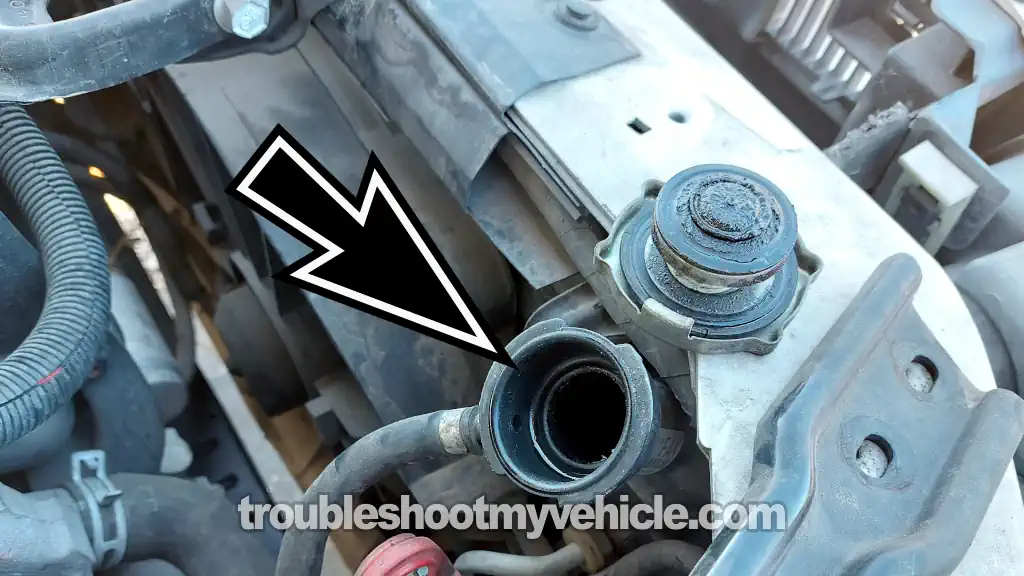
Another common way a head gasket fails is by allowing combustion pressure to leak into the engine's cooling system.
We can check for this by removing the radiator cap (only when the engine is completely cold) and then having a helper crank the engine while we watch the coolant inside the radiator.
If the head gasket has failed and combustion gases are entering the cooling system, you'll usually see the coolant surge upward or even shoot out of the radiator neck as the engine is being cranked.
If the coolant remains undisturbed (doesn't bubble violently or get pushed out of the radiator), then this test tells us that combustion pressure isn't leaking into the cooling system.
IMPORTANT: Never remove the radiator cap while the engine is hot or even warm. Always let the engine cool down completely first. Otherwise, the cooling system may still be under pressure, and hot coolant can spray out and cause serious burns.
Let's get started:
- 1
Remove the radiator cap.
Before continuing, make sure the coolant level is near the top of the radiator. If necessary, add coolant or water. - 2
Have your helper crank the engine while you watch the coolant in the radiator from a safe distance.
- 3
You'll see one of two results:
1.) The coolant surges upward or shoots out of the radiator neck while the engine is cranking.
2.) The coolant remains undisturbed. In other words, cranking the engine has little or no effect on the coolant level inside the radiator.
Now let's interpret your test results:
CASE 1: The coolant surged or shot out of the open radiator while the engine was being cranked. This confirms that combustion pressure is entering the cooling system. In most cases, this means you've got a blown head gasket, although a cracked cylinder head or engine block can produce the same result.
CASE 2: The coolant remained undisturbed. This is the correct and expected test result. It tells you that combustion pressure isn't leaking into the cooling system.
If your Buick LeSabre starts and runs with a cylinder misfire, our next step is to check the engine's compression. For that test, go to: TEST 3: Engine Compression Test.
If the engine starts but overheats within a few minutes, then the next step is to perform a block test with a combustion leak tester. Go to: TEST 4: Using A Chemical Block Tester (Combustion Leak Tester).
TEST 3: Engine Compression Test
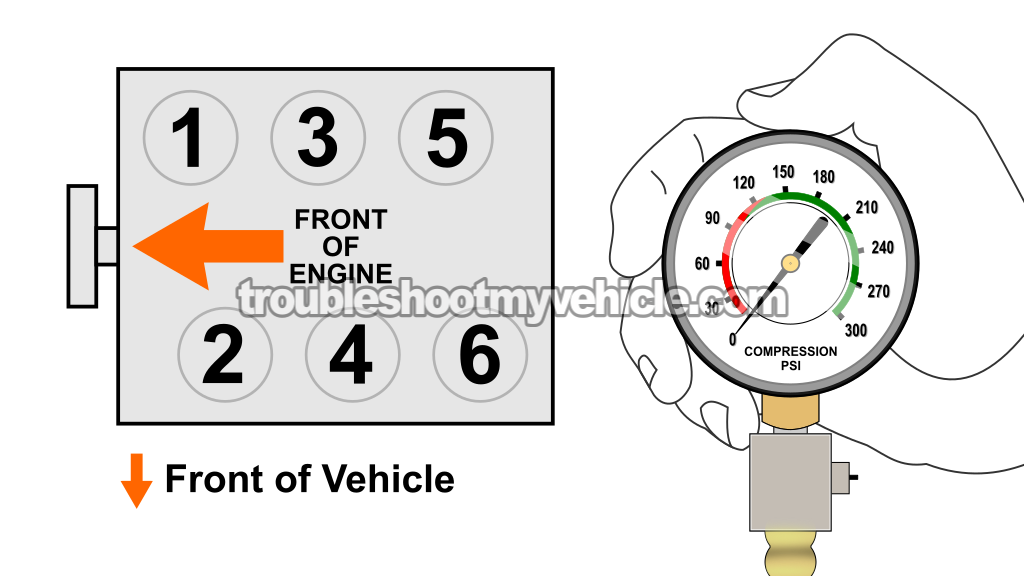
In some cases, especially after a severe overheating event, the head gasket fails between two neighboring cylinders.
When this happens, the compression pressure from one cylinder escapes into the other through the damaged section of the head gasket. As a result, both cylinders end up with little or no compression.
On the 3.8L V6 Buick LeSabre, this type of head gasket failure usually causes the engine to start and run, but it'll run rough because those two neighboring cylinders are misfiring.
The good news is that this type of head gasket failure is pretty easy to identify with a simple engine compression test.
NOTE: If you'd like more detailed instructions on how to perform a compression test and interpret the results, check out this tutorial: How To Test Engine Compression (1994-2005 3.8L V6 Buick LeSabre).
These are the test steps:
- 1
Disable the ignition system by unplugging the ignition control module (ICM) electrical connector.
- 2
Remove all six spark plugs.
- 3
Thread the compression tester into the spark plug hole for cylinder #1.
NOTE: Hand-tighten the compression tester only. Don't use any tools to tighten it. - 4
Have your helper crank the engine until the needle on the compression gauge stops climbing.
Once the needle stops moving, have your helper stop cranking the engine. - 5
Record the compression reading along with the cylinder number. You can use the cylinder identification illustration above as a reference.
- 6
Repeat steps 3 through 5 on the remaining cylinders.
Now let's interpret your test results:
CASE 1: Every cylinder produced a compression reading above 0 PSI. This tells you that neither head gasket has failed between two neighboring cylinders.
Our next step is to perform a chemical block test with a combustion leak tester. Go to: TEST 4: Using A Chemical Block Tester (Combustion Leak Tester).
CASE 2: Two neighboring cylinders had 0 PSI (or extremely low) compression. This confirms that the head gasket has failed between those two cylinders, allowing the compression pressure to leak back and forth between them.
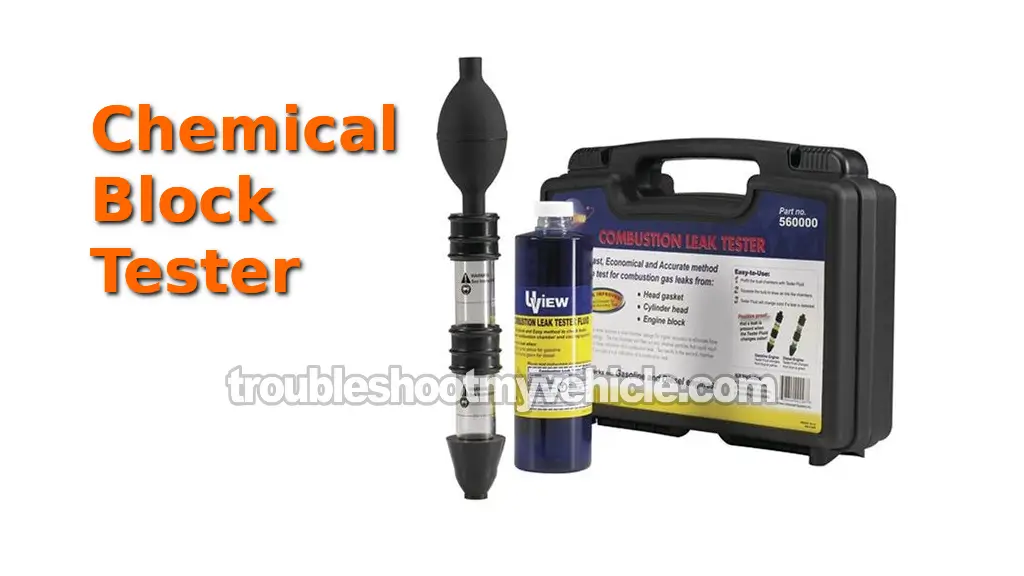
TEST 4: Using A Chemical Block Tester (Combustion Leak Tester)
Sometimes a head gasket is just beginning to fail. When that's the case, it may not trigger any of the symptoms that the previous three tests are designed to detect.
In other words, the engine oil still looks normal, the coolant doesn't shoot out of the radiator while the engine is cranking, and all six cylinders still have good compression.
Even so, the engine overheats within a few minutes of starting for no apparent reason.
When this happens, the best way to confirm that a blown head gasket is causing the overheating problem is with a chemical block test using a combustion leak tester.
The cool thing is that this is the same test most professional repair shops use to diagnose a blown head gasket, and it's a test you can easily perform yourself.
A block test checks for combustion gases leaking into the engine's cooling system. If combustion gases are present in the radiator, you know there's an internal engine problem.
Here's a basic overview of how the test works:
- Add the test fluid: Fill the tester with the blue test fluid according to the manufacturer's instructions.
- Start the engine: Let the engine idle.
- Place the tester on the radiator: Install the tester on the open radiator neck. Depending on the coolant level, you may need to remove a little coolant so the tester can draw air from the radiator instead of coolant.
- Draw air through the tester: Squeeze and release the rubber bulb to pull air from the radiator through the test fluid.
- Watch for a color change: If the blue fluid turns yellow (on gasoline engines), combustion gases are present in the cooling system. This confirms a blown head gasket, a cracked cylinder head, or a cracked engine block.
- No color change: If the test fluid stays blue, combustion gases are not entering the cooling system. This lets you rule out a blown head gasket, cracked cylinder head, and cracked engine block as the cause of the overheating problem.
If you don't already have a combustion leak tester, you can usually find one at your local auto parts store or comparison shop for one here:


 20%
20%Disclosure: As an Amazon Associate, I earn from qualifying purchases. If my tutorials help you, using these links is an easy way to support the site at no extra cost to you. Thank you!
More 3.8L V6 Buick LeSabre Diagnostic Tutorials
You can find a complete list of diagnostics tutorials for your 3.8L V6 Buick LeSabre in this index:
Here's a small sample of the tutorials you'll find:
- How To Test The CKP Sensor With A Multimeter (1994-2005 3.8L V6 Buick LeSabre).
- How To Test The TPS With A Multimeter (1996-2005 3.8L V6 Buick LeSabre).
- Common Causes Of Spark Plug Failure (1994-2005 3.8L V6 Buick LeSabre).
- How To Test Engine Compression (1994-2005 3.8L V6 Buick LeSabre).

If this info saved the day, buy me a beer!
