

A cylinder balance test is a test that helps you figure out which cylinder is the one that's misfiring (dead) and it comes in pretty handy, especially when your Nissan Quest or Mercury Villager is OBD I equipped and doesn't have misfire diagnostics, or if it's OBD II equipped but all you're getting is a P0300 misfire trouble code.
In this tutorial, I'm going to explain the two different ways you can perform the manual cylinder balance test to figure out which cylinder or cylinders are misfiring.
Contents of this tutorial:
APPLIES TO: This tutorial applies to the following vehicles:
- 3.0L V6 Nissan Quest: 1993, 1994, 1995, 1996, 1997, 1998.
- 3.0L V6 Mercury Villager: 1993, 1994, 1995, 1996, 1997, 1998.
CYLINDER MISFIRE DIAGNOSTICS:
METHOD 1: Pulling The Spark Plug Wires
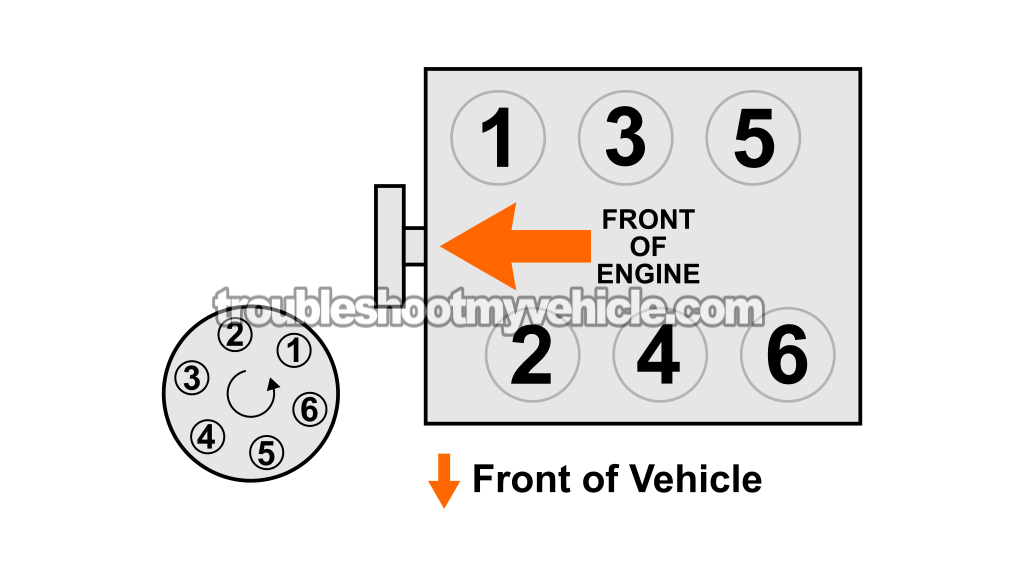
The most common way I've seen my fellow technicians, at the shops where I've worked over the years, do a manual Cylinder Balance Test on the Nissan Quest is to pull the spark plug wires off the spark plugs —one at a time, of course— to see which cylinder doesn't react.
Although this is the most popular way of doing it, I've always had qualms about it because this method can damage the ignition coil inside the distributor. It doesn't happen all the time, but it can happen.
On occasion, I've done this myself too, specifically when I've lacked the necessary tools to perform the cylinder balance test using small pieces of vacuum hose to short out the cylinder. I'll explain that method in the next test section.
Alright, the idea here is simple: you start the engine and you pull one spark plug wire off its spark plug.
- If the engine's idle gets worse, then you've got a live cylinder.
- If you pull the spark plug wire off and nothing happens —specifically, the engine idle doesn't get worse— then that's your dead cylinder (the one that isn't working to begin with).
Alright, this is what you'll need to do, step by step:
- 1
Start the engine and let it idle.
- 2
Disconnect one spark plug wire from its spark plug.
- 3
Notice what happens to the engine idle.
Does the engine shake more (idle rougher) or nothing changes? - 4
Reconnect the spark plug wire back onto its spark plug.
- 5
Again, notice what happens to the engine idle.
Does the engine shake more (idle rougher) or nothing changes? - 6
Repeat the test on the same cylinder to make sure of the result.
- 7
Move on to the next spark plug wire and repeat the procedure until you've checked all six cylinders.
OK, let's find out what it all means:
CASE 1: Disconnecting the spark plug wire from its spark plug caused a drop in the engine RPMs. This test result confirms that that specific cylinder is OK and working.
With this result, you can also rule out the spark plug, the fuel injector, and you can say the cylinder has good compression.
CASE 2: Disconnecting the spark plug wire from its spark plug did not cause a drop in the engine RPMs. With this result, you can conclude that that cylinder is dead.
A cylinder can be dead for several reasons —an ignition problem, a fuel injector issue, or low compression. To help you pinpoint the cause, I've created a step-by-step tutorial that walks you through the troubleshooting. You can find it here: How To Troubleshoot A Cylinder Misfire (1993-1998 3.0L V6 Nissan Quest).
METHOD 2: Vacuum Hose On Distributor Cap Method
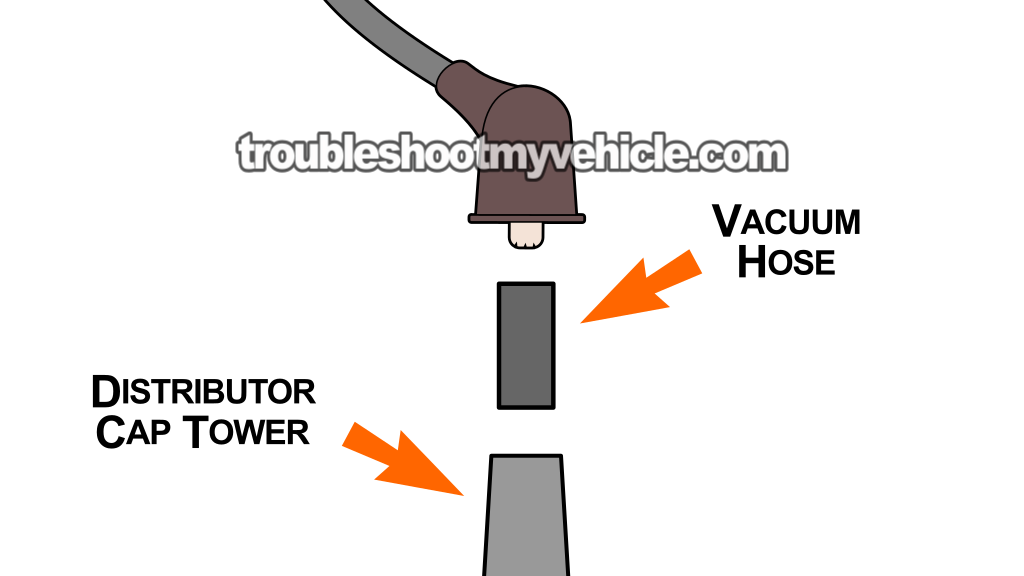
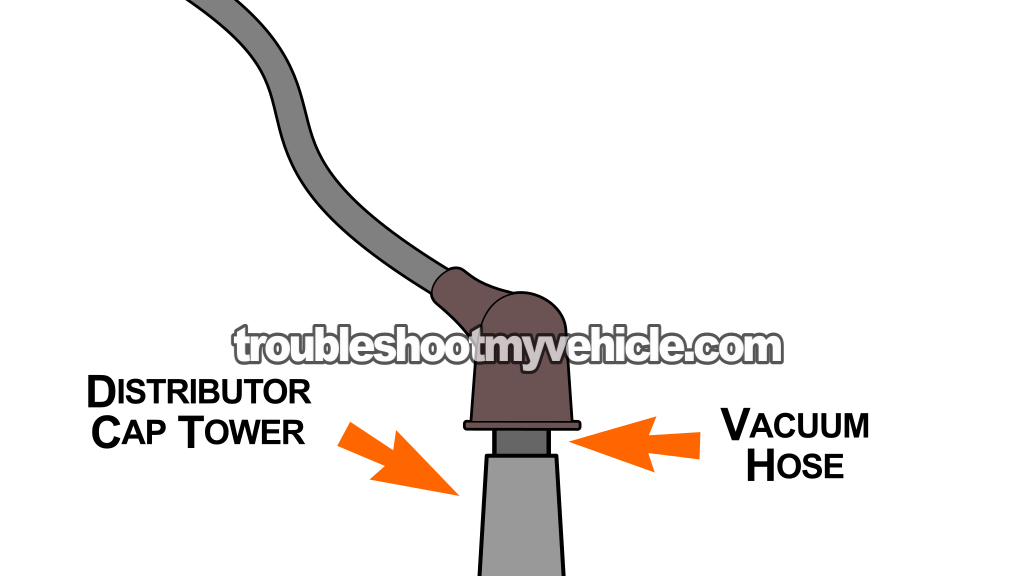
The other way of doing a manual cylinder balance test is a bit more involved, but it's easier on the ignition coil inside the distributor. Instead of pulling spark plug wires, we're going to:
- Disable the fuel injectors for cylinders 2, 4, and 6, which are very accessible.
- Disable the spark plug wire for cylinders 1, 3, and 5 —whose fuel injectors are under the intake manifold plenum— with a small piece of vacuum hose (I'll explain that in just a bit).
What you're looking for is how the engine reacts when you unplug an injector or disable a spark plug wire:
- If the cylinder was already dead: Unplugging its injector or disabling its spark plug wire won't change the engine RPM or the way the engine idles. The engine is going to keep running the same because that cylinder wasn't contributing in the first place.
- If the cylinder was live: Unplugging its injector or disabling its spark plug wire will cause the engine to idle rougher. You'll usually feel the engine shake more and see a drop in RPM. This tells you that cylinder was doing its job before you cut fuel to it.
This is how we'll disable the spark plug wire of cylinders 1, 3, and 5:
- We'll use a short piece of vacuum hose between the spark plug wire and its tower on the distributor cap. In other words, the vacuum hose becomes a "spacer" between the distributor tower and the spark plug wire.
- With the vacuum hose in place, we'll use a 12-Volt test light (the type with an incandescent light bulb) to short that cylinder. We'll touch the metal probe of the test light to the vacuum hose spacer which will safely Ground out (short) the spark in the wire.
This lets us "kill" that cylinder on purpose and watch how the engine reacts —just like when we unplugged the fuel injectors on the easy-to-reach cylinders. I'll walk you through this step-by-step in the instructions below.
As you can see, this method does take a little bit more prep than just pulling the spark plug wires to find the dead cylinder. But it's a safer choice if the ignition coil is old. Pulling the spark plug wires can overload the ignition coil and kill it —and then you're dealing with an engine no-start problem.
12-VOLT TEST LIGHT: To disable the spark plug wires for cylinders 1, 3, and 5, you'll need a regular 12-Volt automotive test light that uses an incandescent bulb. If you don't have one —or want to upgrade— this is the one I use and recommend: Lisle 28400 Heavy Duty 12 Volt Test Light (Amazon affiliate link).
OK, let's begin:
PART 1: Cylinders 2, 4, And 6:
- 1
Start the engine and let it idle.
- 2
Unplug the connector for the fuel injector you're testing.
NOTE: You may want to do a dry run before starting the engine and practice unplugging the injectors. It'll save you from struggling with them during the actual test. - 3
Notice the change in the engine's idle (if any).
If the cylinder is alive, you'll see a drop in RPM and the engine will shake more. If the cylinder is already dead, the idle won't change at all. - 4
Reconnect the injector.
- 5
Repeat the test on the other accessible injectors (cylinders 4 and 6).
- 6
Turn OFF the engine.
PART 2: Cylinders 1, 3, and 5:
- 1
Place a short piece of vacuum hose between the cylinder #1 spark plug wire and its tower on the distributor cap.
The vacuum hose should fit snugly over the spark plug wire's metal terminal. Once the hose is on the wire's terminal, push the hose (with the terminal inside it) into the cap tower (see illustrations 1 and 2 above).
NOTE: You should now see a short section of vacuum hose exposed between the distributor cap tower and the spark plug wire boot (see illustration 2). - 2
Start the engine and let it idle.
- 3
With the engine idling, touch your 12-Volt test light to the vacuum hose to short that cylinder.
NOTE: This will only work with a standard 12-Volt test light that has an incandescent bulb. - 4
Notice the change in the engine's idle (if any).
- 5
Repeat steps 3 and 4 several times to make sure of the test result.
- 6
Turn the engine OFF.
- 7
Remove the vacuum hose and reconnect the spark plug wire normally.
- 8
Repeat the test on the remaining cylinders (cylinders #3 and #5).
Here's what your test result means:
CASE 1: Disabling the fuel injector or the spark plug wire caused a drop in the engine RPMs. This lets you know that that specific cylinder is OK and doing its job. You can also conclude that the cylinder is getting spark, it's getting fuel, and it's got good compression.
CASE 2: Disabling the fuel injector or the spark plug wire did not cause a drop in the engine RPMs. This tells you that that cylinder is dead.
A cylinder can be dead for several reasons —an ignition problem, a fuel injector issue, or low compression. To help you pinpoint the cause, I've created a step-by-step tutorial that walks you through the troubleshooting. You can find it here: How To Troubleshoot A Cylinder Misfire (1993-1998 3.0L V6 Nissan Quest).
More 3.0L V6 Nissan Quest Tutorials
You can find a complete list of tutorials for the 3.0L V6 Nissan Quest in this index:
Here's a sample of the tutorials you'll find in the index:
- How To Test The Ignition Coil And Power Transistor (1993-1998 3.0L V6 Nissan Quest).
- How To Test The Camshaft Position Sensor (1993-1998 3.0L V6 Nissan Quest).
- How To Test For A Blown Head Gasket (1993-1998 3.0L V6 Nissan Quest).
- How To Do And Interpret An Engine Compression Test (1993-1998 3.0L V6 Nissan Quest).

If this info saved the day, buy me a beer!
