
Whether your 3.0L V6 Nissan Quest or Mercury Villager is OBD I or OBD II equipped, there are quite a few things that can cause a cylinder misfire or rough idle condition.
The good news is that pinpointing the exact cause of the issue really isn't that hard. In this tutorial, I'm going to show you my method for finding the exact cause of the cylinder misfire.
This step-by-step diagnostic testing strategy will help you locate the source of the misfire quickly and without any guesswork. And the best part is you don't need any fancy or expensive diagnostic equipment to get it done.
Contents of this tutorial:
APPLIES TO: This tutorial applies to the following vehicles:
- 3.0L V6 Nissan Quest: 1993, 1994, 1995, 1996, 1997, 1998
- 3.0L V6 Mercury Villager: 1993, 1994, 1995, 1996, 1997, 1998.
What Is A Cylinder Misfire?
Every one of the six cylinders in your Nissan Quest or Mercury Villager's 3.0L V6 needs three basic things to make power:
- Fuel
- Spark
- Air (compression)
When the engine starts to misfire, it's almost always because one of these three essentials is missing in one or more cylinders.
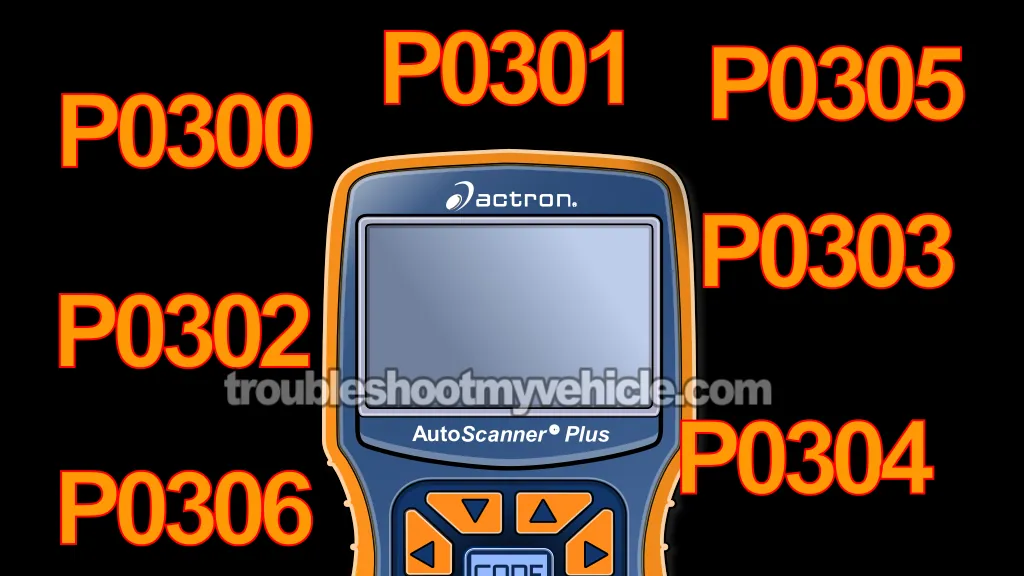
On the OBD II–equipped models (1996-1998), a cylinder misfire will cause the check engine light to flash on and off while the misfire is happening. The PCM will also store a misfire trouble code —either a P0300 for a random misfire or a cylinder-specific code such as P0301, P0302, P0303, P0304, P0305, or P0306.
Whether your Nissan Quest or Mercury Villager is OBD I or OBD II, you're going to notice one or more of these performance issues when a misfire is present:
- Rough or uneven idle
- Hesitation or stumbling during acceleration
- Loss of power while driving —especially under load
The good news is that tracking down the cause of a cylinder misfire isn't difficult. With a few basic tools and a clear diagnostic plan, you can troubleshoot it yourself without needing a shop. And if you do decide to take it in, you'll know exactly what's going on and what repairs you're willing to authorize.
How To Troubleshoot A Cylinder Misfire
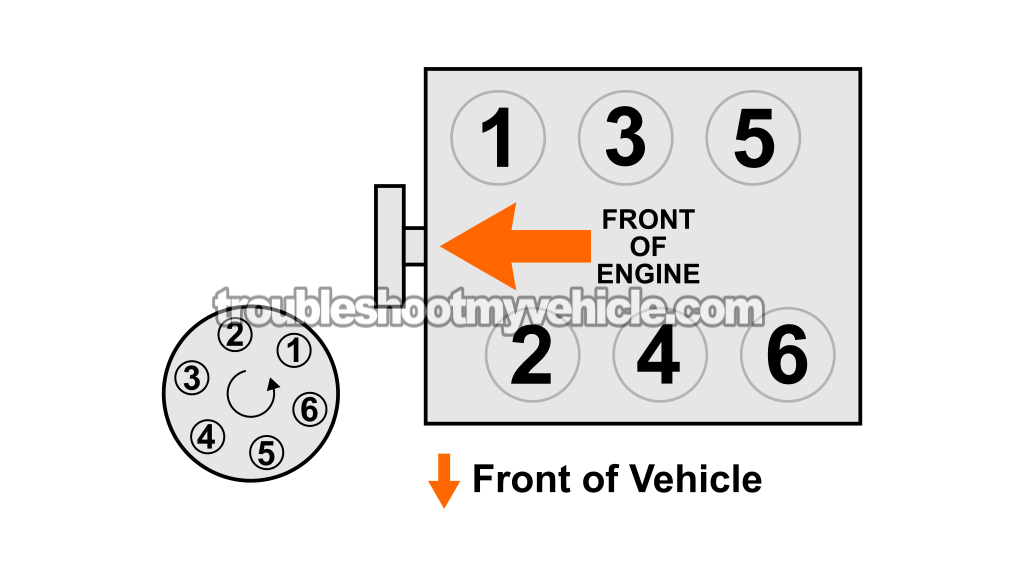
The key to diagnosing a cylinder misfire on your Nissan Quest or Mercury Villager comes down to performing three basic checks:
- A spark check
- A fuel pressure check
- A compression check
You usually won't need to run all three tests, but it's important to understand what each one involves —and more importantly, how to decide where to begin your diagnostic process.
In this section, I'm going to walk you through the specific steps and tests you'll use to pinpoint the exact cause of the misfire and get your 3.0L V6 running smoothly again.
Alright, let's get started.
- STEP 1: Identify which cylinder is misfiring.
- Finding the dead cylinder is the most important first step in tracking down the cause of the misfire. Once you know which cylinder isn't contributing, the rest of the diagnostic process becomes much easier.
- On the 1996-1998 OBD II equipped Nissan Quest and Mercury Villager, this usually means connecting a code reader or scan tool and checking for cylinder-specific misfire trouble codes stored in the PCM.
- If the PCM doesn't set a specific misfire code —or only gives you a P0300 random misfire code— or if your minivan is OBD I equipped, you may need to perform a manual cylinder balance test to pinpoint the dead cylinder: How To Do A Manual Cylinder Balance Test (1993-1998 3.0L V6 Nissan Quest).
- STEP 2: Confirm that the dead cylinder is getting spark.
- Once you've identified which cylinder is misfiring, the next step is to make sure its spark plug wire is actually delivering spark.
- This check has to be done with a dedicated spark tester —any spark tester will work.
- If the spark plug wire isn't delivering spark, then you've just confirmed that the ignition system is the cause of the misfire. You'll need to do some further spark checks to rule out the spark plug wire or the distributor cap as the cause of the missing spark.
- I've written a step-by-step tutorial on how to test the spark plug wire and distributor cap, and you can find it here:
- STEP 3: Inspect the spark plug and spark plug boot from the misfiring cylinder.
- If the dead cylinder's spark plug wire is delivering spark, the next step is to remove the spark plug and make sure the spark plug itself is in good condition.
- Start by checking the spark plug's porcelain insulator for any cracks or carbon tracks —either one will cause the spark to arc to Ground (on the engine) before it reaches the spark plug's electrode.
- Take a close look at the spark plug electrodes. Make sure they aren't blocked by carbon deposits and that they haven't worn down to nubs.
- While you're there, check for oil leaking from the valve cover gaskets onto the spark plug wire boots or spark plugs. Over time, this oil will pool around the spark plug and cause a misfire.
- These tutorials will show you exactly what to look for:
- STEP 4: Make sure the misfiring cylinder has good compression.
- If the dead cylinder is getting spark and no issues are found with the spark plug, the next step is to measure the compression of the misfiring cylinder and make sure it's in the same range as the other cylinders.
- This is one of the most commonly overlooked steps when diagnosing a misfire or a rough idle condition, but it's absolutely essential. A cylinder that can't build enough compression will misfire no matter if its getting spark and fuel.
- As a general rule, if the misfiring cylinder's compression is more than 15% lower than the highest reading out of all six cylinders, that cylinder is going to cause an engine performance issue.
- I've written a detailed, step-by-step tutorial that shows you how to perform and interpret a compression test on the 3.0L V6 Nissan Quest and Mercury Villager. You can find it here:
- Here's a case study where low compression was the root cause of a misfire:
- STEP 5: Test the "dead" cylinder's fuel injector resistance.
- Once you've confirmed that the cylinder has spark, the spark plug is in good shape, and compression is within range, the next step is to check the fuel injector circuit.
- This involves measuring the resistance of the injector and its wiring to make sure everything is within specification. On the 3.0L V6 Nissan Quest and Mercury Villager, you should typically see between 11 and 18 Ohms.
- This is a very simple test, and I'll walk you through it step-by-step in the following tutorial:
- STEP 6: Clogged fuel injector.
- If you've confirmed that the dead cylinder is getting spark, its spark plug is in good condition, has solid compression, and its injector circuit is within the correct resistance range, then you can safely conclude that the fuel injector itself is clogged and isn't delivering enough fuel —or any fuel at all.
- So if you've made it this far and every other test has passed with flying colors, your next step is to replace the fuel injector to solve the cylinder misfire.
At the core of the diagnostic strategy I've outlined is a simple process of elimination. Yep —that's really all there is to it.
The first and most important step is identifying the dead cylinder. Once you know which cylinder isn't firing, the rest of the process becomes pretty straightforward. All you're doing now is confirming three things: that the cylinder is getting spark, that it can build good compression, and that its fuel injector is working properly.
By following the test steps above, you'll be able to pinpoint the exact cause of the misfire on your Nissan Quest or Mercury Villager's 3.0L V6 quickly and with confidence. And best of all, you'll save yourself time, money, and the frustration of replacing parts that don't fix the problem.
Vacuum Leaks —A Common Cause Of Misfire And Rough Idle
If the vacuum leak is large enough, you'll usually notice a misfire (often setting a P0300 on 1996-1998 models) or a rough idle —especially after the engine has warmed up and RPMs decrease.
Here are the most common vacuum leak spots I run into on these 3.0L V6 engines:
- Cracked, loose, or disconnected vacuum hoses.
- PCV hoses or cracked rubber elbows.
- Leaking brake booster hose or a faulty check valve.
The good news is that checking for vacuum leaks isn't difficult. There are several ways to do it, but my go-to method is using carburetor cleaner spray.
All you do is spray carb-cleaner around the areas where you suspect a leak. If there's a leak in the spot you're spraying, the engine will pull the spray in, and you'll hear the idle smooth out or change. That change in idle confirms you've found a vacuum leak.
More 3.0L V6 Nissan Quest Tutorials
You can find a complete list of tutorials for the 3.0L V6 Nissan Quest (Mercury Villager) in this index:
Here's a small list of the tutorials you'll find there:
- How To Test The Camshaft Position Sensor (1993-1998 3.0L V6 Nissan Quest).
- How To Test For A Blown Head Gasket (1993-1998 3.0L V6 Nissan Quest).
- How To Safely Probe The PCM Connector -Without Damaging It (1993-1998 3.0L V6 Nissan Quest).
- Fuel Injector Circuit Wiring Diagram (1996-1998 V6 Nissan Quest).

If this info saved the day, buy me a beer!
