
Quite a few things can cause a cylinder misfire to light up the check engine light with a misfire trouble code on your 1996–2007 3.0L V6 Ford Taurus or Mercury Sable.
The cool thing is that troubleshooting and pinpointing the exact cause of the misfire isn't that difficult.
In this tutorial, I'm going to show you my diagnostic strategy that'll help you easily and quickly figure out what the heck is causing that cylinder misfire. And by the way, you're not going to need any fancy or expensive diagnostic equipment to do it.
Contents of this tutorial:
APPLIES TO: This tutorial applies to the following vehicles:
- 3.0L V6 (OHV) Ford Taurus: 1996, 1997, 1998, 1999, 2000, 2001, 2002, 2003, 2004, 2005, 2006, 2007.
- 3.0L V6 (OHV) Mercury Sable: 1996, 1997, 1998, 1999, 2000, 2001, 2002, 2003, 2004, 2005.
What Is A Cylinder Misfire?
Every one of the six cylinders in your Ford Taurus or Mercury Sable's 3.0L V6 engine needs three things to produce power:
- Fuel.
- Spark.
- Air (Compression).
Whenever the engine is suffering a cylinder misfire, you can bet that one of these three is missing from one or more cylinders.
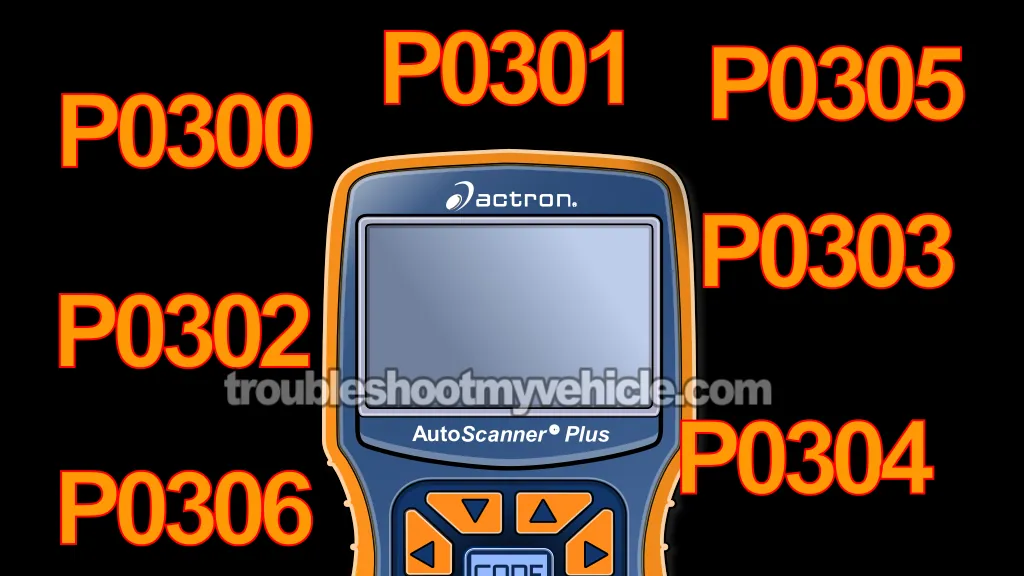
A cylinder misfire will trigger the check engine light to flash ON and OFF (while the misfire is happening), and it's going to store a specific cylinder misfire code: P0300 (random misfire), or specific cylinder codes: P0301, P0302, P0303, P0304, P0305 or P0306.
Besides the check engine light and the stored cylinder misfire trouble code, you're also going to see one or more of the following engine performance problems:
- Rough or uneven idle.
- Hesitation or stumbling under acceleration.
- Loss of power when driving (especially under load).
Thankfully, troubleshooting the exact cause of a cylinder misfire isn't difficult. With a few basic tools and a solid diagnostic strategy, it's something you can do without having to take the vehicle to a shop. And if you do take it in, you'll be better informed about what you're going to allow to get replaced.
How To Troubleshoot A Cylinder Misfire
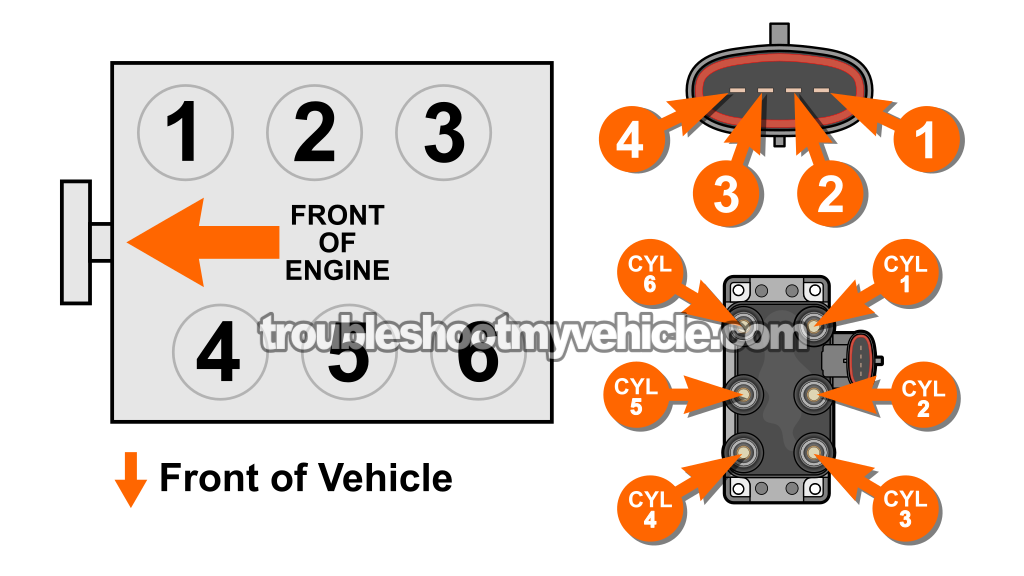
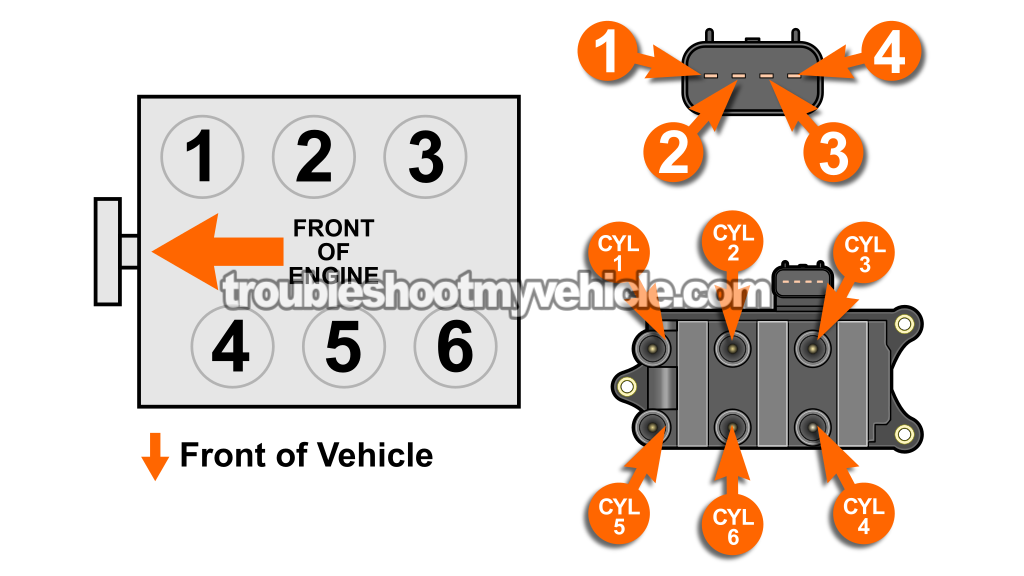
The secret to successfully diagnosing the exact cause of the cylinder misfire on your Ford Taurus or Mercury Sable boils down to performing three basic checks:
- A spark check.
- A fuel pressure check.
- A compression check.
In most cases, you're not going to have to perform all of these tests, but it does help to know exactly what's involved —and, more importantly, where to start your diagnostic process on your vehicle.
So in this section, I'm going to outline the actual steps and tests you'll need to perform to pinpoint the exact source of the cylinder misfire.
Alright, let's get started.
- STEP 1: Identify which cylinder is misfiring.
- Identifying the dead cylinder (or cylinders) is the most critical first step you've got to take to find the culprit behind the misfire.
- Generally, this involves connecting a code reader or scan tool and checking to see if there are specific cylinder misfire trouble codes stored in your Ford Taurus or Mercury Sable's PCM.
- In some rare instances where the PCM doesn't store a specific cylinder misfire code —or only shows a P0300 random misfire code— you may need to do a manual cylinder balance test to pinpoint the dead cylinder.
- STEP 2: Confirm that cylinder is getting spark.
- Once we've ID'd the cylinder that's misfiring, our next step is to make sure the spark plug wire that supplies spark to that cylinder is actually sparking.
- This spark test has to be done with a dedicated spark tester. Any spark tester will do.
- If the spark plug wire isn't delivering spark, then we now know the ignition system is behind the cylinder misfire.
- The next step is to check the ignition coil pack. I've written a step-by-step tutorial on how to test the ignition coil pack, and you can find it here:
- STEP 3: Inspect the spark plug and spark plug boot from the misfiring cylinder.
- If the spark plug wire is delivering spark to the cylinder, then the next step is to remove the spark plug and make sure it's OK —meaning there's no visible damage to it.
- What you're looking for specifically is whether the spark plug's porcelain insulator has any cracks or carbon tracks.
- You also want to look at the electrodes to make sure they aren't blocked with heavy carbon deposits and that they haven't worn down to a nub.
- Make sure oil isn't leaking from the valve covers onto the spark plug wires or spark plug wire boots.
- These tutorials will show you what to look for:
- STEP 4: Make sure the misfiring cylinder has good compression.
- If you found that the ignition system doesn't have any issues, then the next step is to check the dead cylinder's compression and make sure it's within the same range as the rest of the engine's cylinders.
- This is probably one of the most overlooked steps when diagnosing a cylinder misfire, but it's one of those essential tests you've got to perform to get to the source of the misfire or rough idle problem.
- If the dead cylinder's compression is more than 15% lower than the highest reading of all six cylinders, that cylinder is going to misfire.
- I've written a step-by-step tutorial that'll help you do and interpret a compression test on the 3.0L V6 Ford Taurus or Mercury Sable, and you can find it here:
- Here's a case study where low compression was the root cause of a misfire:
- STEP 5: Test the "dead" cylinder injector's resistance.
- After confirming that the misfiring cylinder has spark and good compression, the next step is to check the fuel injector circuit.
- This means making sure the fuel injector circuit —the injector and its wiring— is within the specified resistance. It's usually 11 to 18 Ohms on the 3.0L V6 Ford Taurus and Mercury Sable.
- This is a super easy test to do, and I'll show you how in this tutorial:
- STEP 6: Test the injector spray pattern.
- This is the last step in pinpointing the source of the cylinder misfire. It's done only after you've confirmed the dead cylinder is getting spark, has good compression, and its fuel injector circuit is within the specified resistance.
- This involves removing the fuel injector from its place on the fuel rail and connecting it to an adapter that'll let you hook the injector up to a can of brake cleaner spray. This allows you to visually check if the injector sprays at all, and if it does, to make sure it's spraying in a fine mist and in a cone-shaped pattern.
- By visually checking the fuel injector spray pattern, we can see if the injector is clogged —either partially or completely.
- This step-by-step tutorial will walk you through how this test is done:
At the heart of the diagnostic strategy I've outlined above is a simple process of elimination. Yep —that's really all there is to it.
First of all, you've ID'd the dead cylinder, which is the most important and critical first step. Once the dead cylinder is identified, all we have to do now is check that the cylinder is getting spark, make sure it's producing good compression, and confirm that its fuel injector is OK.
By following the test steps I've outlined above, you're going to quickly and easily find out what's causing your Ford Taurus or Mercury Sable's 3.0L V6 engine to misfire. And that's going to save you time, money, and the frustration of replacing parts that won't solve the problem.
Vacuum Leaks —A Common Cause Of Misfire And Rough Idle
The 2001-2007 3.0L V6 Ford Taurus and Mercury Sable are notorious for suffering vacuum leaks from the intake manifold gaskets.
This is because the gaskets between the upper intake manifold plenum and the lower intake manifold are rubber, and the gaskets that seal the lower intake manifold to the cylinder heads are a composite-type gasket —basically plastic. Over time, these gaskets harden, shrink, and cause vacuum leaks.
The intake manifold–to–cylinder head gaskets don't just harden —they eventually become brittle and start to break apart, which leads to engine coolant leaks and, of course, vacuum leaks.
In the initial stages of these gaskets failing, you're going to notice a misfire (usually setting a P0300 DTC) or a rough idle, especially when starting the engine cold. As the engine warms up, the rough idle or cylinder misfire tends to go away because the gaskets warm up and begin to seal.
Here are the top vacuum leak spots I run into on these engines:
- Hardened or shrunken rubber intake manifold plenum gaskets (very common).
- Cracked, disconnected, or loose vacuum hoses.
- PCV hoses or cracked rubber elbows.
- Leaky brake booster hose or faulty check valve.
- Cracked plastic vacuum fittings on the intake manifold.
The good news is that checking for vacuum leaks isn't a difficult or complicated process. There are several ways to check for them, but my go-to test is using carburetor cleaner spray.
I spray carb-cleaner around the areas I suspect of a vacuum leak, and if there's one (in that specific part I'm spraying), the spray will get sucked in. This will cause the engine's idle to smooth out or change, confirming that particular spot has a vacuum leak.
I've written a step-by-step tutorial that explains how to use carb-cleaner spray to check for vacuum leaks, and you can find it here: How To Check For Vacuum Leaks (1990-2007 3.0L V6 Ford Taurus, Mercury Sable).
More 3.0L V6 Ford Taurus And Mercury Sable Tutorials
You can find a complete list of tutorials for the 3.0L V6 Ford Taurus (Mercury Sable) in this index:
Here's a sample of the tutorials you'll find in the index:
- How To Test The TPS With A Multimeter (1996-2007 3.0L V6 Ford Taurus, Mercury Sable).
- How To Test The MAF Sensor (1996-1999 3.0L V6 Ford Taurus, Mercury Sable).
- How To Test The Fuel Pump (2004-2007 3.0L V6 Ford Taurus, Mercury Sable).
- How To Test For A Blown Head Gasket (1990-2007 3.0L V6 Ford Taurus, Mercury Sable).

If this info saved the day, buy me a beer!
