
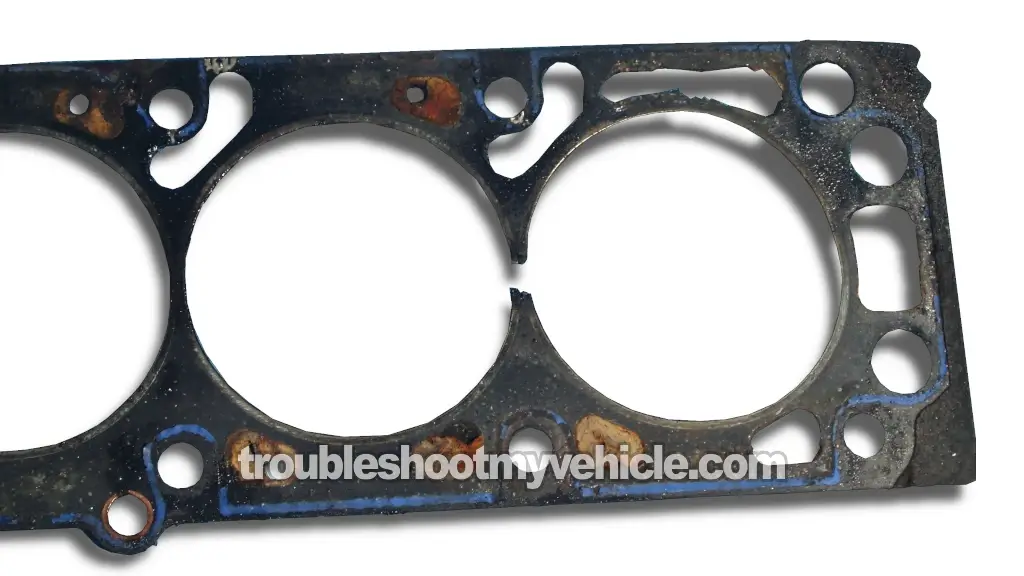
There are four tests you can do to figure out if your 1999-2002 Nissan Quest or Mercury Villager's 3.3L V6 engine has a blown head gasket or not. These are pretty easy tests you can do yourself and they don't require expensive diagnostic equipment.
As a matter of fact, two of these tests don't require any tools whatsoever, and you can knock them out in about 5-10 minutes. The other two tests do involve using some tools. One is a compression test, which means you're going to need a compression tester. The other is a block test, where you'll use a combustion leak detector kit to see if exhaust gases are leaking into the cooling system.
In this tutorial, I'm going to walk you through each of these four tests step by step, so you can quickly and easily determine whether you've got a blown head gasket or not.
Now, hopefully your minivan checks out fine, but if something's not right, this tutorial will help you pinpoint the issue to a blown head gasket.
Contents of this tutorial:
- Symptoms Of A Blown Head Gasket.
- TEST 1: Oil The Color Of 'Coffee With Too Much Creamer'.
- TEST 2: Exhaust Gases Shooting Out Of The Radiator.
- TEST 3: Doing A Compression Test.
- TEST 4: Using A Chemical Block Tester (Combustion Leak Tester).
- Frequently Asked Questions.
- More 3.3L V6 Nissan Quest Diagnostic Tutorials.
APPLIES TO: This tutorial applies to the following vehicles:
- 3.3L V6 Nissan Quest: 1999, 2000, 2001, 2002.
- 3.3L V6 Mercury Villager: 1999, 2000, 2001, 2002.
Symptoms Of A Blown Head Gasket
Since the 3.3L V6 engine in your Nissan Quest or Mercury Villager has two cylinder heads, it's got two cylinder head gaskets. Their job is to keep three things separate from each other: engine coolant, engine oil, and the compression/combustion/exhaust pressures inside the cylinders.
When one or both of these head gaskets fail —most commonly due to severe engine overheating— you're going to see one or more of the following symptoms or engine performance issues:
- Overheating: The engine runs hot, and you can't find an obvious reason for it.
- Oil and coolant mixing: The oil turns a milky color —looks like coffee with way too much creamer— from coolant leaking into the crankcase.
- White exhaust smoke: Thick, white smoke coming out of the tailpipe from antifreeze burning inside the cylinders.
- No-start condition: The engine will crank, but it just won't fire up.
- Cooling system overpressure: The coolant expansion tank gets overpressurized and starts pushing coolant out whenever the engine idles or after you shut it off.
TEST 1: Oil The Color Of 'Coffee With Too Much Creamer'
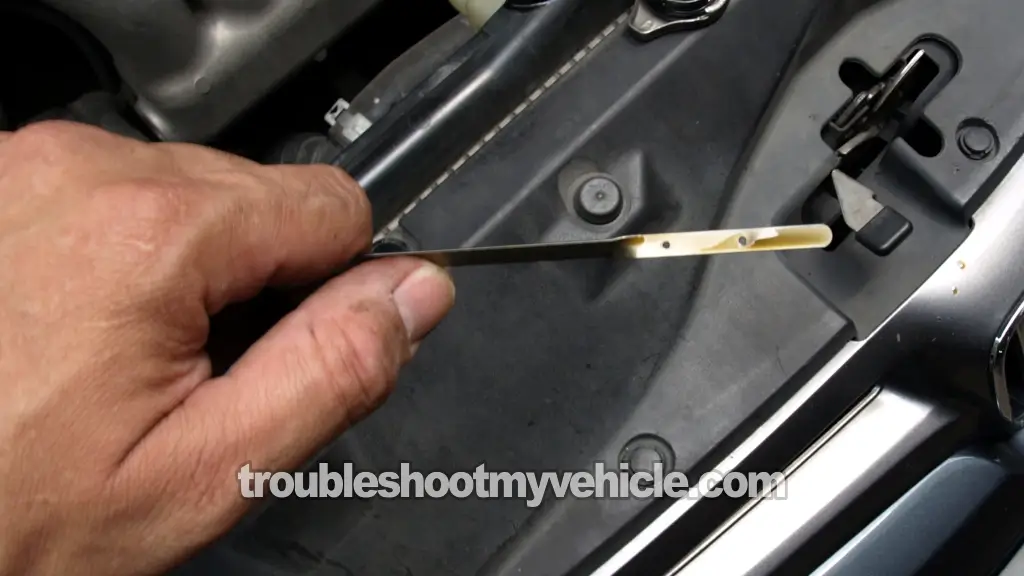
One of the most common end results of a blown head gasket on your Nissan Quest or Mercury Villager is coolant making its way into the crankcase and mixing with the engine oil.
The end result is oil with a milky white color —something more like coffee with way too much creamer.
We can quickly check to see if this has happened by pulling the engine oil dipstick and looking at the color of the oil on it.
If the oil has a milky white color, that confirms one or both of your Nissan Quest or Mercury Villager's head gaskets have failed. If the engine oil looks normal and has its usual color, we'll move on to TEST 2.
Alright, here we go:
- 1
Open the hood.
- 2
Pull out the engine's oil dipstick.
- 3
Check the color of the oil.
- 4
You'll see one of two things:
1.) The engine oil will be a creamy tan/off white color and as thick as syrup.
2.) The engine oil will be a normal color and viscosity.
Let's examine your test result:
CASE 1: The engine oil looks milky white, like coffee with too much creamer. Yep, one or both head gaskets have failed. You'll need to replace both cylinder head gaskets.
CASE 2: The engine oil's color looks normal. This is the correct and expected test result.
The next step is to check whether compression/combustion/exhaust pressures are leaking into the cooling system. Continue on to: TEST 2: Exhaust Gases Shooting Out Of The Radiator.
TEST 2: Exhaust Gases Shooting Out Of The Radiator
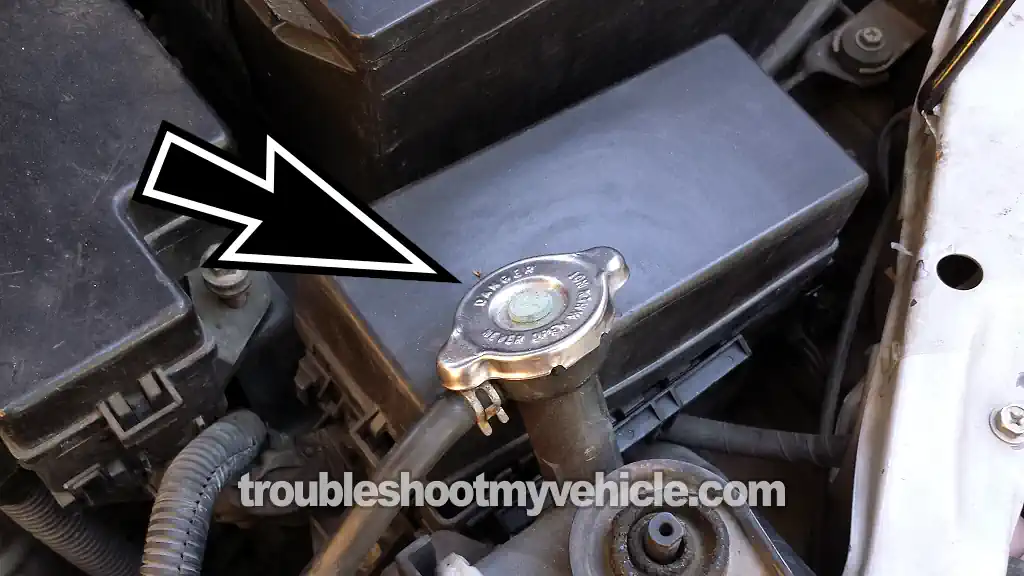
As the engine cranks or runs, each one of those six cylinders goes through a cycle of creating compression, combustion, and exhaust pressures. When the head gaskets are OK and doing their job, those pressures stay contained inside the cylinders and are kept out of the cooling system.
But when one or both head gaskets fail, it's not uncommon for that seal to be compromised. When that happens, those compression/combustion/exhaust pressures escape into the cooling passages in the engine block (or cylinder head) and make their way into the radiator.
We can quickly and easily check to see if this has happened by cranking the engine with the radiator cap removed. We're going to see one of two results with this test.
- The coolant remains undisturbed in the radiator: This is the normal and expected test result, and it confirms that the cylinder head gaskets are doing their job of keeping compression, combustion, and exhaust pressures contained within the cylinders.
- The coolant is pushed out forcefully from the radiator: This confirms that one or both head gaskets have failed and are allowing these pressures to enter your Nissan Quest or Mercury Villager's cooling system.
CAUTION: This test must be done with a completely cool or cold engine. If your Nissan Quest's engine has been running for any length of time, let it cool down completely before removing the radiator cap. Opening a hot radiator can cause serious burns from escaping coolant. If you need to speed up the cooling process, place a fan over the engine to help it cool faster.
Here's what to do:
- 1
Remove the cap from the radiator.
Check the coolant level inside the radiator. If it's low or empty, add water or coolant until it reaches the proper level. - 2
Have your helper crank the engine while you watch the radiator neck from a safe distance.
- 3
You'll get one of two results:
1.) The coolant inside the expansion tank shoots up or bubbles out.
2.) The coolant level remains undisturbed —cranking the engine has no effect.
Let's see what your test result means:
CASE 1: The coolant bubbled up or was pushed out while you cranked the engine. This confirms that one or both head gaskets on your Quest or Villager's 3.3L V6 engine have failed and are allowing compression/combustion/exhaust gases into the engine's cooling system.
CASE 2: The coolant stayed completely undisturbed as you cranked the engine. So far so good. This result tells us the head gaskets are not letting cylinder pressures leak into the cooling system.
Our next test depends on how your minivan's engine behaves once it starts:
- If the engine starts and runs but has a cylinder misfire —go to: TEST 3: Doing A Compression Test.
- If the engine starts and runs but overheats within a few minutes —go to: TEST 4: Using A Chemical Block Tester (Combustion Leak Tester).
TEST 3: Doing A Compression Test
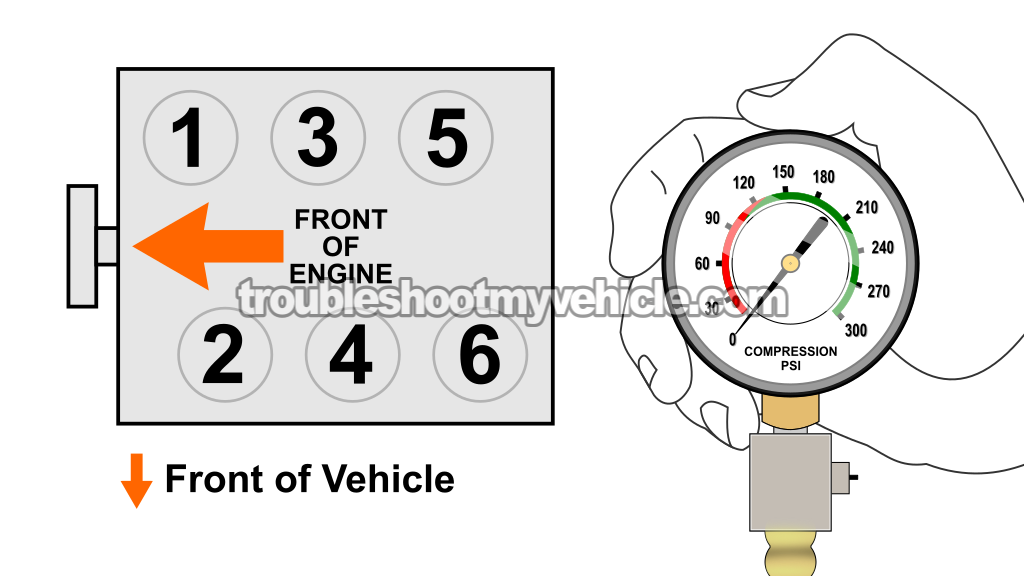
One type of cylinder head gasket failure I've seen quite a bit is when a section of the gasket burns right between two side-by-side cylinders. When this type of failure happens, the engine will still start and run, but it'll only be running on four cylinders, since those two adjacent cylinders aren't able to produce any compression.
The end result is an engine that runs rough and shakes like crazy. If you look at the blown head gasket photo I'm using at the beginning of this tutorial, you'll see a perfect example of this kind of failure, where the gasket has burned between two side-by-side cylinders.
To troubleshoot this specific type of head gasket failure, we need to do an engine compression test. What we're looking for in the results are two side-by-side cylinders that register zero PSI compression.
NOTE: If you'd like a full, step-by-step walk-through on how to perform and interpret a compression test on your Quest or Villager's 3.3L V6 engine, take a look at this tutorial: How To Do And Interpret An Engine Compression Test (1999-2002 3.3L V6 Nissan Quest).
OK, here's what you need to do:
- 1
Disable the ignition system.
You can easily accomplish this disconnecting the distributor's electrical connector. - 2
Disable the fuel system. It's important that fuel not be injected into the engine.
You can do this by removing the fuel pump relay or the fuel pump fuse. - 3
Disconnect all spark plug wires (from their spark plugs) and then take out all of the spark plugs.
NOTE: Before you remove the spark plug wires, label them so that you'll be able to easily reconnect them to their correct spark plug after the test. - 4
Thread in the compression tester by hand, on the first spark plug hole you're gonna' start with.
Do not use any tools to tighten the compression tester. Hand tightening the compression tester is more than enough to get the proper results. - 5
Have a helper crank the engine while you observe the compression tester.
- 6
Once the gauge's needle stops climbing, have your assistant stop cranking the engine.
- 7
Write down the reading and what cylinder it belongs to (you can use the image in the image viewer to help you identify the cylinder) on a piece of paper.
- 8
Remove the compression tester and repeat the above steps in the remaining cylinders.
Let's see what your compression test results are telling us:
CASE 1: All cylinder compression readings are similar. These readings tell us that both head gaskets are intact and not burned through between any two cylinders.
If you still suspect a head gasket issue —especially if your engine overheated recently— the next step is to perform a block test using a combustion leak detector. Continue to: TEST 4: Using A Chemical Block Tester (Combustion Leak Tester).
CASE 2: Two side-by-side cylinders show 0 PSI compression. This result confirms that the head gasket has burned through at the point between those two cylinders. In this situation, both head gaskets will need to be replaced.
TEST 4: Using A Chemical Block Tester (Combustion Leak Tester)
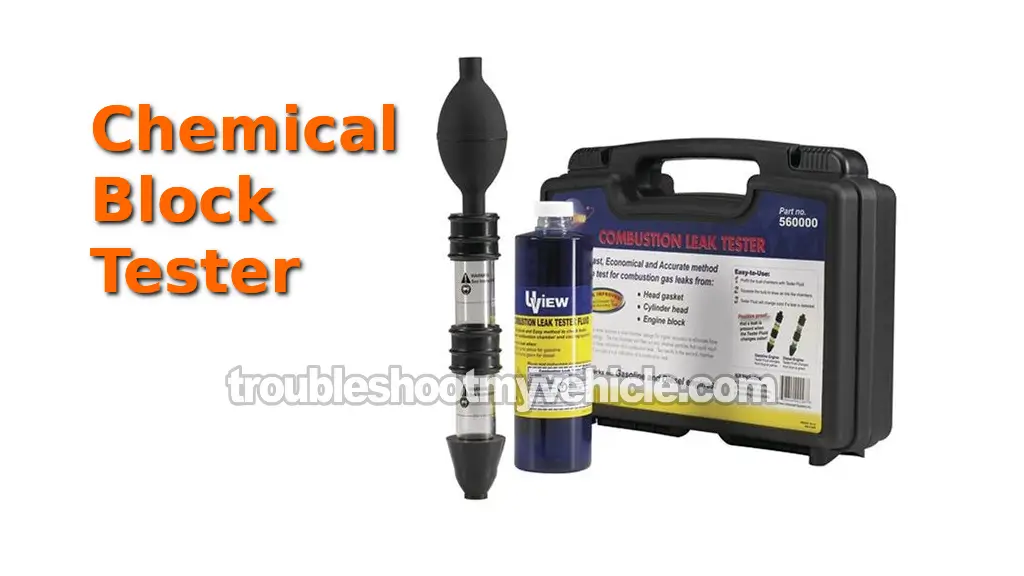
The main test an auto repair shop will do —besides checking the condition of the engine oil and checking to see if you've got cylinder pressures escaping into the cooling system— and the test they're actually charging you the big bucks for, is a block test using a combustion leak detector tool.
In the early stages of a head gasket failure, you normally won't see any of the conditions the previous three tests are looking for. Usually, all you'll notice is that the engine overheats within a few minutes of starting, and for no apparent reason.
And the only way to pinpoint this overheating issue to one or both head gaskets is to do a block test with a combustion leak detector.
In a nutshell, here's how the block tester works:
- A blue chemical solution is poured into the tester (see photo above).
- The tester is set on the open expansion tank neck. You may have to drain a little coolant to let the tool pull in radiator air.
- Start the engine.
- Squeeze the rubber bulb to draw air through the fluid chambers. The bubbling air reacts with the chemical.
- If the fluid changes from blue to yellow (on gasoline engines), combustion gases are present in the engine's cooling system. That means a blown head gasket, cracked block, or cracked cylinder head.
- If the fluid stays blue, then those issues are not present.
You can get the chemical and block tester at most auto parts stores or here:


Disclosure: As an Amazon Associate, I earn from qualifying purchases. If my tutorials help you, using these links is an easy way to support the site at no extra cost to you. Thank you!
Frequently Asked Questions
1. Do both cylinder heads need to come off? Yes —once your tests have confirmed that you've got a blown head gasket issue on your Nissan Quest or Mercury Villager's 3.3L V6 engine, both head gaskets need to be replaced.
Also, once you've got both cylinder heads off the engine, each one should be checked for warpage and cracks.
2. How do I know if a cylinder head is cracked? The only way to check if a cylinder head is cracked is after it's been removed, where you can flip it over and inspect it for any visible cracks.
Big cracks are usually the easiest to spot. That said, some cracks aren't obvious, and in those cases, you'll need to take both cylinder heads to a machine shop to have them pressure-tested to make sure they're in good shape.
3. Do the cylinder heads need to be resurfaced? Yes —if they're still within the allowable machining limits, a machine shop should resurface both cylinder heads. They'll measure them and let you know whether resurfacing is possible or if a head is beyond its service limit.
You can also check for warpage yourself using a straightedge (if you own one). If a head is flat —and especially if your Quest's 3.3L V6 engine did not overheat— resurfacing may not be necessary. The important thing is confirming that the cylinder head–to–block mating surface is flat and that overheating didn't play a role in the head gasket failure.
4. Do the cylinder head bolts need to be replaced? Yes. Your Quest's 3.3L V6 engine uses torque-to-yield head bolts. During installation, each bolt is tightened and then turned a specified number of degrees, which intentionally stretches the bolt.
Because of this stretching, reusing the old bolts means reinstalling hardware that's already been weakened. That's asking for trouble and can lead to sealing problems down the road.
When putting the cylinder heads back on, always install new head bolts.
More 3.3L V6 Nissan Quest Diagnostic Tutorials
You can find a complete list of 3.3L V6 Nissan Quest and Mercury Villager diagnostic tutorials in this index:
Here are some of the tutorials you'll find in the index:
- How To Test The MAF Sensor (1999-2002 3.3L V6 Nissan Quest).
- How To Test The Fuel Injectors (1999-2002 3.3L V6 Nissan Quest).
- Common Causes Of Spark Plug Failure (1999-2002 3.3L V6 Nissan Quest).
- How To Do And Interpret An Engine Compression Test (1999-2002 3.3L V6 Nissan Quest).

If this info saved the day, buy me a beer!
